The situation of persons with disabilities is not only a national issue, but a European one
In recent months, the situation of persons with disabilities has increasingly come to the forefront of public debate in Romania at all levels. It is important, however, to state clearly: decisions affecting the lives of persons with disabilities are not made exclusively in Romania. A significant share of these decisions is taken in Brussels, and it also depends on us whether they provide real protection or further increase vulnerability.
Around 90 million people live with disabilities in the European Union. While important progress has been made in recent years, persons with disabilities still face numerous barriers in their daily lives — in education, on the labour market, in healthcare and social services, in transport, and in achieving independent living. These challenges are particularly acute in Central and Eastern Europe, including Romania.
In Romania, we are often confronted with excessive bureaucracy, a lack of solidarity, and the state’s inability to distinguish between abuse and genuine need. As a result, not only do fraudulent cases remain in the system, but people who truly need support are often left behind. In this context, we cannot afford to be dependent solely on decisions taken in Bucharest.
This is why a much stronger European safety net is needed — one that can counterbalance irresponsible decisions and policy failures at national level. The European Union is not an adversary; it is an opportunity. European decisions tend to be unfavourable when we fail to make our voices heard: when we do not express our views in time and when we do not present Romania-specific problems and solutions in Brussels.
In 2021, the European Commission adopted the EU Strategy for the Rights of Persons with Disabilities 2021–2030. Now at its mid-term point, it has become clear that despite the measures taken so far, additional and more targeted action is required. The Commission is therefore preparing a new Communication for 2026 aimed at strengthening the Strategy, with a particular focus on accessibility, independent living, inclusive education and employment, and combating all forms of discrimination.
As Second Vice-President of the SEDEC Commission and Vice-President of the Harghita County Council, I am convinced that a European strategy can only be truly effective if it is not based solely on documents drafted in Brussels, but also reflects the lived experiences of local communities. Civil society organisations, professionals and persons directly affected face these challenges on a daily basis — challenges that are often perceived only in theoretical terms at European level.
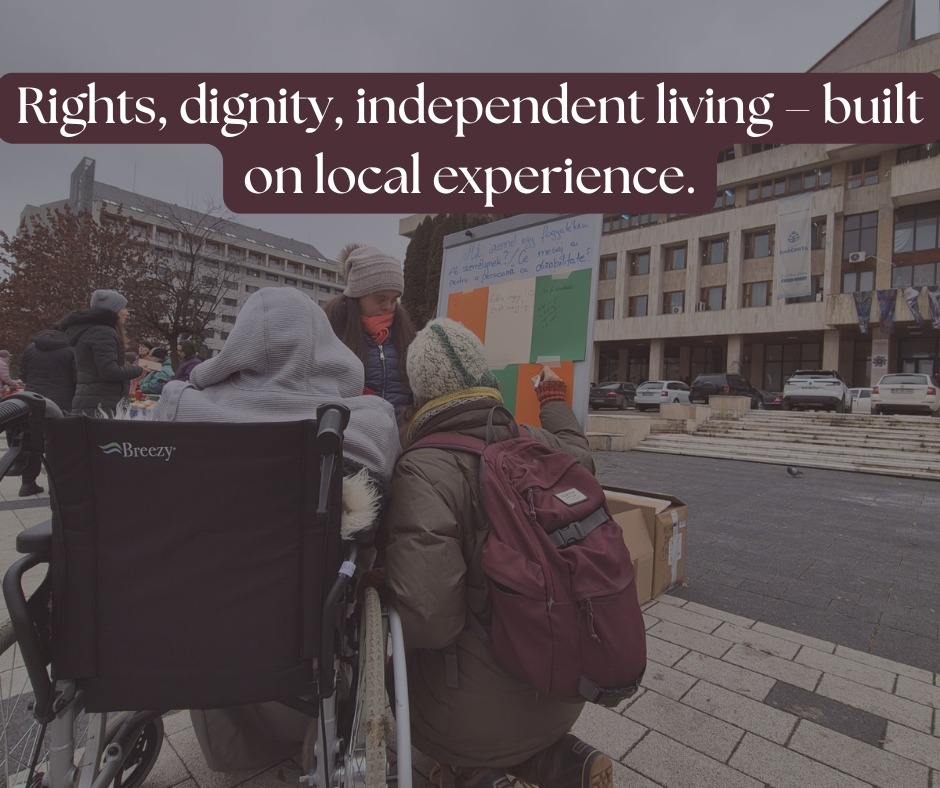
For this reason, I have launched a consultation with local and county-level organisations and individuals in Harghita County working with and for persons with disabilities. My aim is to ensure that local experiences are not merely heard, but are effectively integrated into the preparation of European decisions, helping to ensure that irresponsible national-level decisions are “caught” by the European framework.
I invite all those who are directly concerned or who have professional experience in this field to contribute to this shared effort by sharing their views and practical experiences through the online questionnaire available at the following link:
In Romania, persons with disabilities have too often been subjected to undignified treatment and exclusion. This is unacceptable. Both in Harghita County and in Brussels, I am working to ensure that the next European disability strategy provides stronger protection for the rights and dignity of persons with disabilities and brings real change to everyday life.
I firmly believe that a fairer Europe can only be built if persons with disabilities are not merely recipients of policy, but active shapers of community life — grounded in local experience and represented effectively at European level.