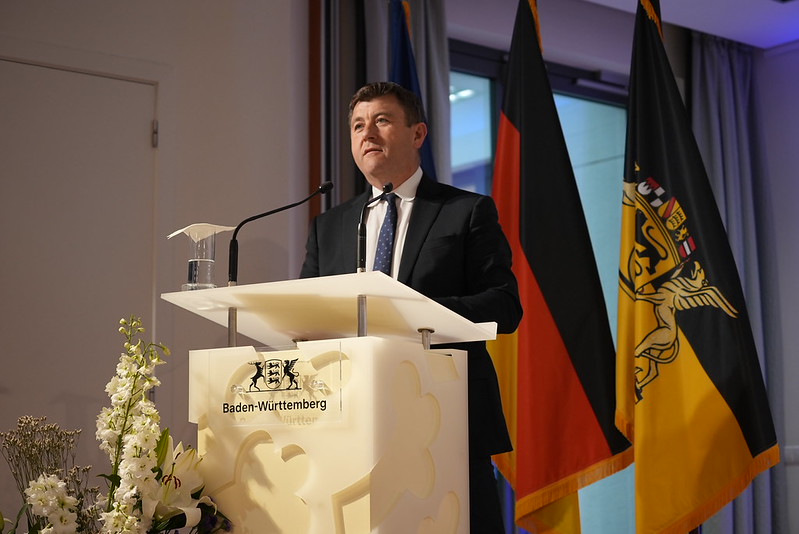
During the meeting, Csaba Borboly, Vice-President of Harghita County Council and member of the European Committee of the Regions, stressed that local and regional authorities must be meaningfully involved from the outset in developing European education and skills policies.
“This anniversary is not only a celebration but also a message. Regions are not merely the implementers of European policies; they are also their co-authors. We understand the real needs of local communities, educational institutions, businesses and employees. Our experience is therefore also needed when European decisions are being prepared,” Csaba Borboly emphasised.
Paste the full YouTube link on a separate line here:
Learning Opportunities Beyond Formal Education
The examples presented at the event demonstrated that lifelong learning is not solely the responsibility of the formal education system. Libraries, cultural institutions, community spaces, businesses and workplaces can also become places of learning.
The main topics discussed included:
- career guidance;
- youth policies;
- international mobility;
- short and flexible training programmes adapted to labour market needs.
Direct Relevance for Harghita County
According to Csaba Borboly, these issues are also directly relevant to Harghita County. Training opportunities based on local realities and accessible to everyone—regardless of their place of residence, age or social circumstances—are essential to helping young people remain and prosper at home, addressing labour shortages and increasing the competitiveness of local businesses.
“People living in mountainous and rural areas must not be disadvantaged simply because they live far from major university or economic centres. European programmes must support locally available training, digital learning, professional mobility and the recognition of skills acquired in the workplace. The opportunity to learn also means the opportunity to build a future at home,” he highlighted.
Flexible and Inclusive Learning Systems
EARLALL’s anniversary programme will conclude in December 2026 with its General Assembly in Sweden’s Västra Götaland Region.
One of the network’s main objectives for the coming period is to develop flexible and inclusive learning systems capable of responding to technological change, demographic challenges and the needs of a constantly evolving labour market.