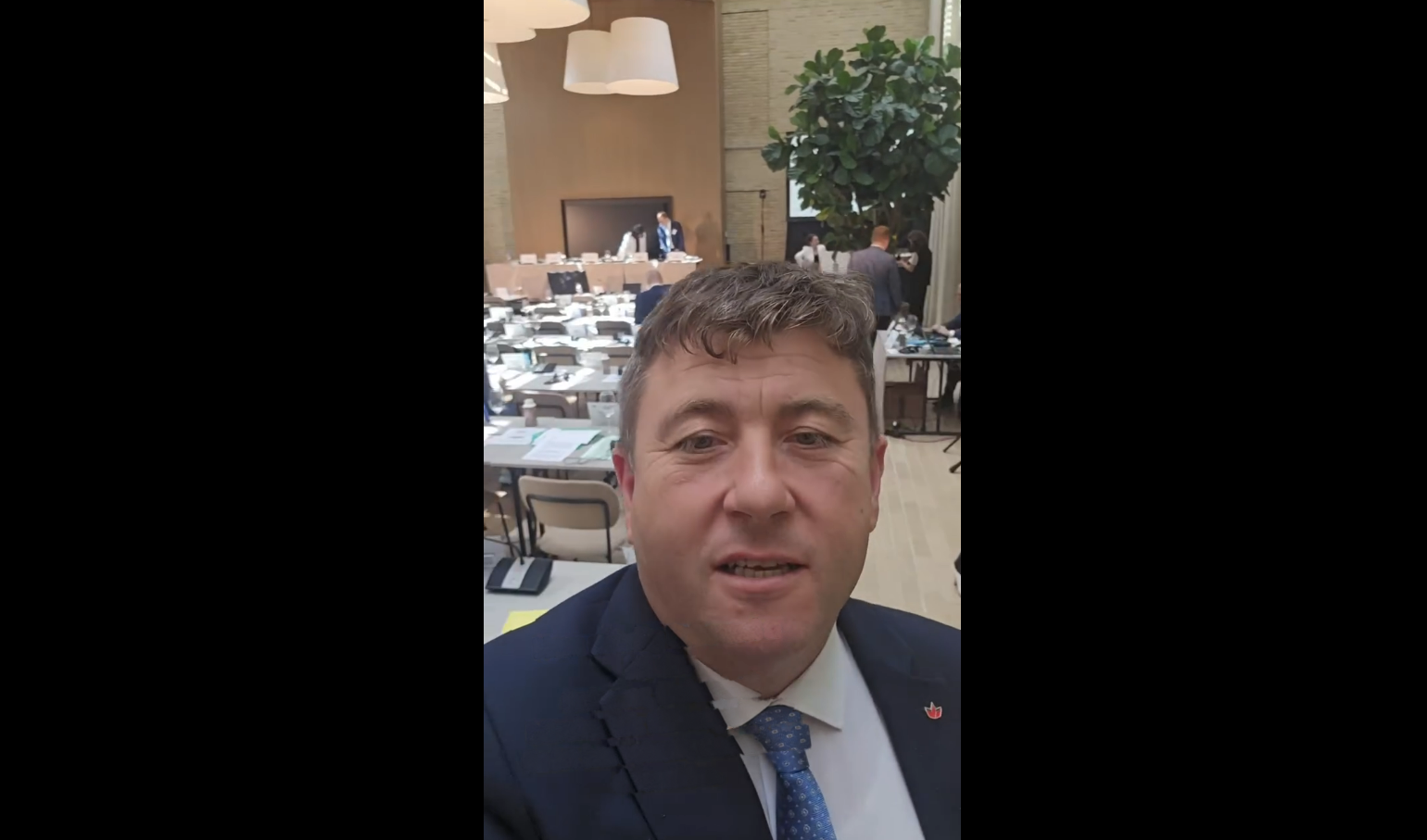
Brussels – Speaking during a plenary debate at the European Committee of the Regions (CoR), Csaba Borboly, Vice-President of Harghita County Council, argued that the EU’s simplification agenda often fails not because of Brussels, but because of rigid national bureaucracies.
He pointed out that in several Member States, including Romania, national administrations frequently multiply and overcomplicate European requirements, sometimes to protect their own institutional position. In doing so, they hinder genuine cooperation between local authorities.
Simplification must also address national implementation
Csaba Borboly called on the European Committee of the Regions to extend the simplification agenda beyond EU legislation itself and address the way in which rules are implemented at national level.
He proposed requiring Member States to publicly justify any additional layers of complexity they add to European rules.
Linguistic rights are not an administrative burden
Particular emphasis was placed on the linguistic rights of national and ethnic minorities.
Csaba Borboly argued that guaranteeing these rights is not an administrative burden, even when it requires additional funding and procedures. On the contrary, it is a genuine test of whether simplification truly brings Europe closer to its citizens.
This principle is especially relevant for minority, rural and border regions across the European Union, as well as for communities along the EU’s external borders that are affected by regional instability.
Stronger local capacity and multilingual public services
The intervention reinforced a broader direction already reflected in recent opinions and amendments of the European Committee of the Regions: strengthening the administrative capacity of small, border and minority-populated regions.
It also highlighted the need for accessible, user-friendly and multilingual digital public services across both Member States and candidate countries.
Csaba Borboly stressed that Europe’s credibility with its citizens – from Harghita County to the EU’s eastern neighbourhood – depends on whether these principles are translated into practice on the ground, not merely agreed upon in Brussels.