Csaba Borboly calls for adequate AgoraEU funding, accessible programmes and meaningful local partnership in the next EU budget.
Europe should not divide into communities that can use its opportunities and communities that can only watch. At the European Committee of the Regions’ political steering group on the next Multiannual Financial Framework on 10 November, AgoraEU rapporteur Csaba Borboly called for adequate funding, simpler access and a meaningful role for local and regional authorities.
The discussion concerned follow-up to the Committee’s budget-related opinions and the developing framework for 2028–2034. Its significance goes beyond programme administration. The rules now under negotiation will shape how communities cooperate, how cultural organisations reach audiences and how younger generations participate in European life.
Partnership must shape decisions, not follow them
The Committee of the Regions unanimously adopted the AgoraEU opinion prepared by Borboly on 6 May. It advances a practical understanding of European values: cultural diversity, democratic participation and fundamental rights need functioning institutions and accessible opportunities in local communities.
The work has involved consultation across political groups and dialogue with Commission services, parliamentary actors and Council presidencies. These exchanges matter because a territorial concern must become a workable provision if it is to influence programme delivery.
Borboly’s earlier budget proposals focused on geographical balance, meaningful local participation and funding proportionate to cultural ambitions. The AgoraEU opinion translates that direction into recommendations on applications, support structures, heritage, media and accountability.
The briefing used for the steering group identifies progress in the Council’s partial position and practical proposals in the parliamentary draft on easier applications, rural cultural actors and stronger applicant support. These are encouraging developments, not a final legislative settlement. Territorial monitoring and the formal role of local and regional authorities still require follow-up.
“Local authorities should not be consulted only after the important choices have been made. Their experience must help shape those choices.”
Make access practical for smaller organisations
AgoraEU is the proposed framework supporting culture, media, civic participation, rights and values. Its European added value depends not only on the quality of its objectives, but also on who can realistically participate.
The CoR opinion calls for two-stage applications and cascade grants. These could reduce the initial workload for smaller applicants and enable support through suitable intermediary organisations. National and, where appropriate, regional contact points should provide practical guidance rather than merely direct applicants to another website.
For small-scale initiatives, the opinion recommends an own contribution of no more than 10% of eligible costs, potentially covered by national, regional or local co-financing. This remains a recommendation in the legislative debate, not an entitlement for future applicants.
The opinion also seeks explicit recognition of living heritage, traditional crafts, minority communities and local and regional media. It supports sustained cooperation between municipalities and regions, including cultural exchange and youth participation.
Territorial monitoring would help establish whether funding reaches different types of places. An impressive aggregate expenditure figure is not enough if smaller communities remain absent. Accountability should include both sound financial management and evidence of fair access.
Protect culture without weakening cohesion
The meeting briefing identifies a proposed 30% reduction to AgoraEU in the Irish Presidency’s negotiating proposal. This is not an agreed Council position. Borboly called for the programme’s funding to be defended within a stronger overall European budget, without reallocating resources away from cohesion policy or other essential programmes.
“Culture, independent media and civic participation are part of Europe’s democratic capacity. They should not be treated as optional extras, and they should not be set against territorial cohesion.”
This is a common European concern. Rural areas, smaller towns and territories with limited administrative capacity exist across the Union. Cooperation between eastern and western regions should help improve the rules for all of them, rather than reinforce a division between centres and peripheries.
The value of the European dimension is precisely that communities can address shared challenges together: transmit skills, develop cultural partnerships, strengthen media literacy and exchange workable solutions. EU support should reward that added value without making application capacity the main test of merit.
Connect European rules with credible local preparation
The proposed National and Regional Partnership Plans would connect several investment and reform priorities. Their final architecture remains under negotiation. Meaningful partnership, clear territorial priorities and safeguards against excessive centralisation are therefore essential.
AgoraEU should complement this framework, not disappear into it. Nor should it be presented as a general funding source for housing, roads, agricultural investment or research. Different objectives require the appropriate instruments, coordinated without financing the same costs twice.
At local level, preparation means identifying a problem, assembling capable partners, assigning responsibilities and explaining how results will be sustained. A regional strategy is useful only when it leads to an actionable pipeline of projects and cooperation.
Borboly is calling on Harghita County Council to undertake this work with municipalities, educational and research institutions, businesses, cultural organisations and civil society. His request is for updated sectoral visions, action plans and partnership plans, supported by designated responsibilities and a clear timetable. He has already prepared materials and proposals and organised information activities; the next step requires an institutional response.
The same preparation logic is relevant to comparable territories throughout Europe. Cross-border cooperation offers opportunities, but eligibility must be checked against each programme’s final rules. No funding award or universal implementation extension beyond 2034 should be assumed.
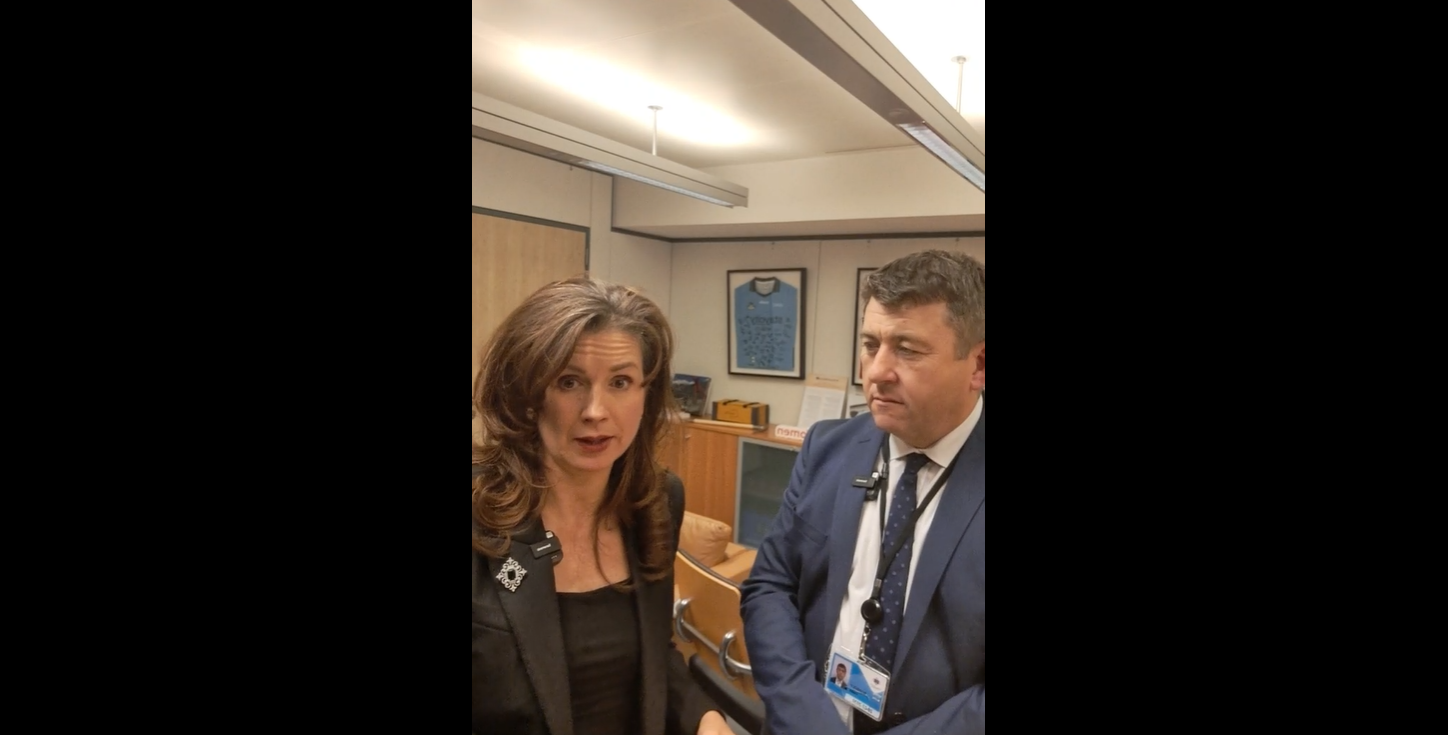
Following the meeting, Borboly also spoke with Kata Tüttő, President of the European Committee of the Regions. The longer conversation is available on his Facebook page.
“The next generation will inherit more than infrastructure. It will inherit the way we work together: trust and mutual respect, or indifference. A shared European future requires us to choose cooperation, and to turn that choice into practical opportunities.”
Borboly will continue the AgoraEU follow-up with the relevant parliamentary rapporteurs and Council Presidency, in coordination with the CoR secretariat. Local and regional partners are invited to contribute concrete examples of access barriers and proposals that can improve implementation across the Union.
Comments are closed.