One European future, built locally: Travnik connects enlargement, reform and regional opportunity
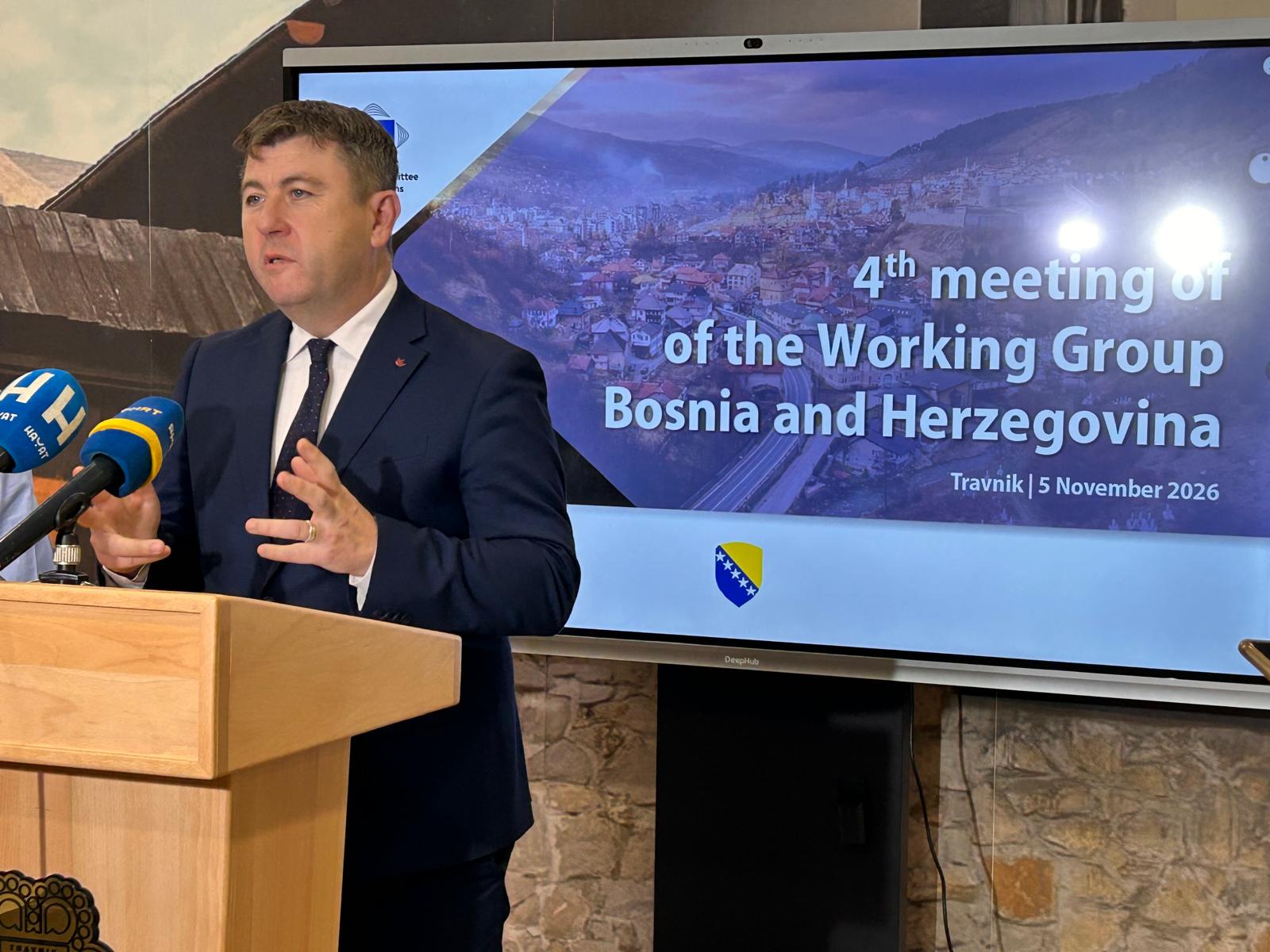
Europe cannot build lasting cohesion if some communities help shape decisions while others are expected only to implement them. That was the central message of the fourth meeting of the European Committee of the Regions Working Group on Bosnia and Herzegovina, chaired by Csaba Borboly in Travnik on 5 November. The meeting brought together EU Ambassador Luigi Soreca, Ambassador Goran Behmen from the Ministry of Foreign Affairs, host Mayor Kenan Dautović, the EU Delegation, the EBRD and representatives of both municipal associations. It connected the country’s European path with the practical questions facing local communities: public services, investment preparation, administrative skills and an effective voice in reform.
Enlargement must deliver where people live
Borboly Csaba argued that local and regional authorities must be involved before commitments, investment priorities and implementation arrangements are finalised. Romania’s experience offers both achievements and lessons. Membership has brought major opportunities, but legislation and funding alone cannot replace prepared local teams or early dialogue.
Water services, waste management and the coexistence of people and wildlife illustrate the wider need to connect standards with resources, public understanding and workable local responsibilities. These challenges have multiple causes. The purpose of sharing experience is not to reduce them to a single historical failure, but to help future members prepare better.
Shared values and meaningful dialogue belong together
The Working Group’s role is to support cooperation across a complex institutional and social landscape. Bosnia and Herzegovina’s communities carry different experiences and the painful legacy of the war in the 1990s. Respect for human dignity, victims and reconciliation remains essential. Dialogue with local authorities across the country must continue on that basis.
Borboly’s earlier proposals for the Working Group’s programme sought stronger attention to minority participation, language rights and inclusive local governance. The approved programme includes these themes, alongside exchanges of regional experience and better access to education, labour markets and public services. Such work brings the realities of diverse European communities into enlargement policy without presenting any one region as a model to be copied wholesale.
The discussion also made clear that cooperation between the two municipal associations already exists. The task is to strengthen its practical impact and connect it more effectively with reform planning, rather than portray dialogue as something that began only in Travnik.
A concrete investment proposal, not an announced funding decision
Mayor Dautović presented a proposal for two complementary investment windows: a route for larger strategic infrastructure and a simpler route for smaller local investments. The EU Delegation expressed interest in the written proposal. Its representative also described early work on possible support for local and association capacity.
The EBRD emphasised project preparation, technical support, financial sustainability and cooperation between municipalities. These contributions pointed to a common challenge: smaller authorities should not be excluded because they have fewer specialists or limited resources for preparation.
No new investment mechanism was adopted at the meeting. The value lies in bringing a concrete local proposal into a discussion with the relevant partners and identifying the questions that need further work.
LORAI: from local evidence to informed reform
The EU and Council of Europe initiative LORAI was a central theme. It aims to strengthen local participation in implementing and monitoring Reform Agendas, while helping local authorities and their associations contribute to policy and investment priorities.
LORAI is not a construction fund or an instrument operated by the Working Group. Its relevance is the link between reliable local evidence and decisions affecting communities. The discussion highlighted the importance of knowing how municipalities participate, who receives their findings and how those findings inform action.
The Working Group can provide a forum for this exchange and bring relevant concerns through the appropriate CoR channels. It does not decide EU payments. Any formal institutional follow up must respect the applicable procedures.
A stronger partnership ahead of the next EU budget
The proposed 2028–2034 framework makes early engagement particularly important. Global Europe and the proposed national and regional partnership plans serve different policy settings, but both underline the need to connect reform, investment and needs on the ground. Their final rules remain subject to negotiations.
The challenge is European, not only Bosnian. Rural, mountainous, border and multilingual communities across the Union and candidate countries need the capacity to participate, not simply receive information after decisions are taken. Cooperation can connect experience from eastern and western regions around shared services and practical solutions.
SALAR International and the Swedish and Swiss partners were recognised for their sustained contribution to local preparation and dialogue. Their work shows why institutional trust and local skills require continuity beyond a single event.
The meeting also discussed the path towards a Joint Consultative Committee. Its establishment was not announced. The next steps require engagement by the competent authorities and the relevant institutional process.
Building a legacy beyond one political term
For Borboly, the purpose of regional cooperation extends beyond immediate visibility. Trusted partners, practical experience and working relationships can remain useful to the next generation of local leaders, whatever the eventual timetable for accession.
The message from Travnik is that enlargement and cohesion should reinforce one another. A common European future needs shared standards, respect for diversity and the capacity to deliver locally. The next task is to turn the proposals raised at the meeting into realistic follow up with the partners concerned.