The social economy is part of Europe’s resilience
The social economy includes cooperatives, associations, foundations, mutual benefit organisations and social enterprises. Their purpose goes beyond profit. They create employment for people who face barriers in the labour market, provide care and affordable services, strengthen short supply chains and help rural and remote communities retain people, skills and value.
Across the European Union, these organisations provide millions of jobs. Their importance becomes clearest where the conventional market withdraws. A cooperative can keep small producers in business. An association can maintain an essential local service. A social enterprise can open a path to work and dignity for people who would otherwise be excluded.
A simple local delivery test
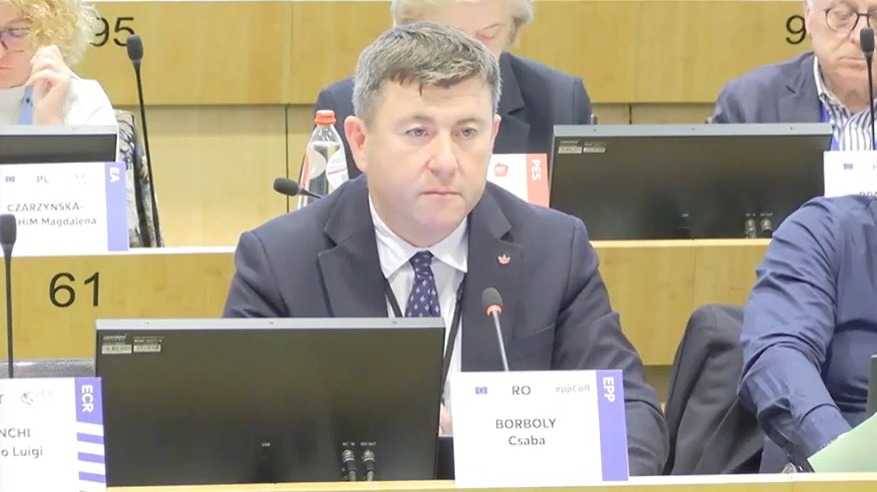
As the Committee of the Regions observer in the European Commission expert group on social economy and social enterprises, I proposed one practical question for every future measure:
Can a small cooperative, association or social enterprise in a rural municipality find, understand and access this support without employing a specialised consultant?
If it cannot, the instrument is not yet close enough to citizens. European success cannot be measured only by the number of strategies, action plans or funding windows created. It must also be measured by whether local actors can actually use them.
Why the eastern and western experience must meet
We must not build two Europes. In one Europe, experienced organisations have the staff, legal confidence and financial capacity to navigate complex programmes. In the other, small actors with strong local roots remain outside because the procedures are too complicated, public procurement favours the lowest price and municipalities lack practical support.
This gap is not only an eastern problem. It is a European challenge because it weakens cohesion, trust and the promise that opportunity should not depend on a postcode.
Eastern regions bring valuable experience in rural resilience, community based services, demographic decline and local cooperation. Western regions bring tested models, institutional capacity and mature support networks. The European dimension allows us to connect these strengths rather than place them in competition.
EU values need local delivery
Solidarity, dignity, inclusion, democracy and territorial cohesion are not abstract concepts. They become real when a person who faces exclusion finds work, when an elderly resident can access care near home, when a small producer reaches the market, and when public money creates measurable community value.
The social economy therefore gives practical meaning to European values. It also strengthens competitiveness by mobilising people and local resources that the conventional economy often overlooks.
Supporting these actors is not charity. It is an investment in participation, resilience and fair growth.
Three practical priorities
First, local and regional access points should offer clear information and hands on training.
Second, public authorities need ready to use procurement models, smaller lots and early market dialogue so that social criteria can be applied with legal confidence.
Third, social economy organisations need patient and blended finance delivered through trusted local intermediaries.
The European Commission’s forthcoming toolkit for local and regional social economy policies is an important opportunity. Regions and cities from across the Union should participate in its design and testing before the wider rollout.
A tool developed with both eastern and western territories will be stronger, more realistic and easier to use.
Working together across Europe
I am ready to contribute local and regional experience to this process and to connect communities that face similar challenges across the Union. The aim is not to copy one model everywhere. It is to create an EU framework flexible enough to respect local identity while guaranteeing fair access to knowledge, finance and markets.
A united Europe is built when institutions, regions, cities and citizens work together. The social economy can help close the distance between east and west, between urban centres and rural areas, and between European policy and everyday life.
That is why we must keep the European values at the heart of this work and make sure they are delivered in every community.