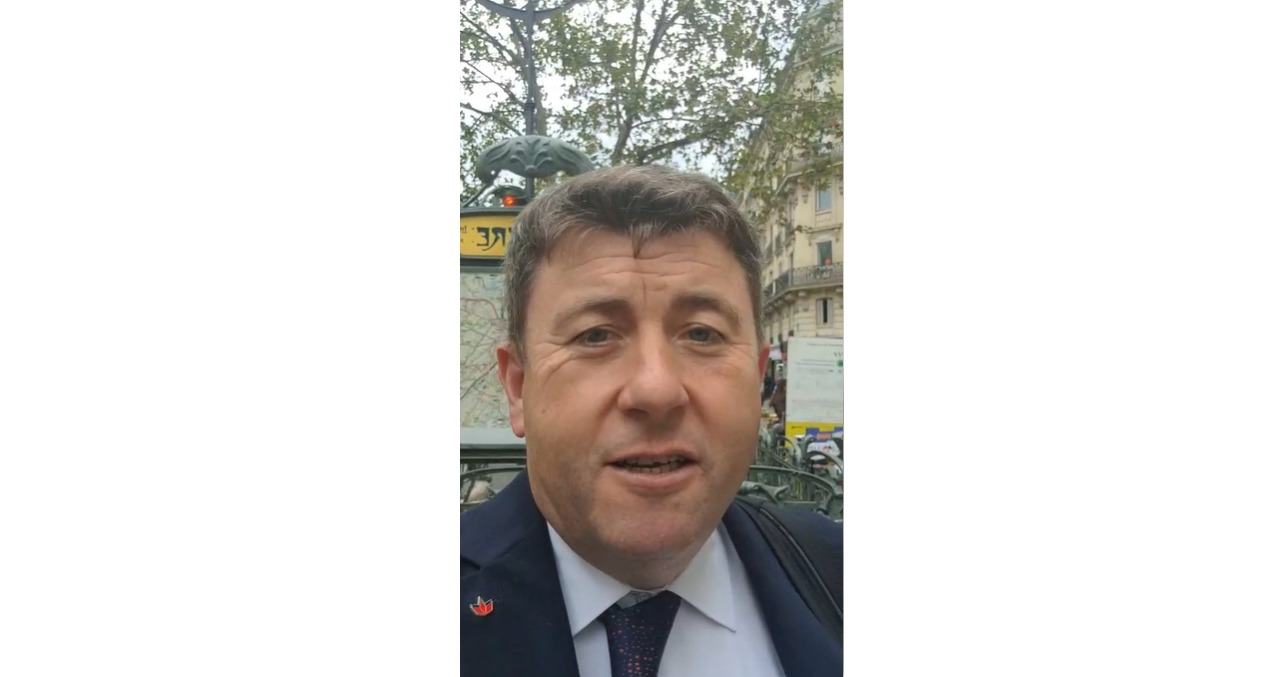
Participating at a meeting of the Committee on Culture, Science, Education and Media of the Parliamentary Assembly of the Council of Europe, he contributed to the report currently being prepared on European rural culture and heritage. He spoke as a member of the European Committee of the Regions, second vice-chair of its SEDEC commission and rapporteur for a regional opinion on rural cultural policies.
Rural culture is not an optional extra. It is a living foundation of identity, intergenerational knowledge, participation and community resilience. A heritage site has a future only when people can continue to use it, care for it and pass it on.
The challenge is European in scale, but solutions must reflect territorial diversity. Mountain regions, remote villages, islands, ageing communities and small towns face different constraints. A one-size-fits-all approach risks widening the gap between eastern and western Europe, and between metropolitan and rural communities across the Union.
Three priorities guided the intervention. First, cultural rights and meaningful access to cultural life must apply regardless of where people live, including national and linguistic minority communities. Second, local and regional authorities must be involved from the outset, not merely consulted after policies have been designed. Third, shared European ambitions need workable instruments.
Those instruments include rural proofing, territorial cultural indicators, capacity building, technical assistance and funding that small municipalities, local associations and cultural practitioners can realistically access. Five proposed textual contributions were also submitted for consideration in the forthcoming Council of Europe report and related recommendations.
Young people are central to this agenda. Rural heritage must connect with education, digital access, entrepreneurship, housing and services, allowing new generations not only to preserve traditions but also to shape their future.
The European dimension is essential. The Council of Europe offers a forum for shared cultural and human-rights commitments, while the European Union and its institutions can help translate compatible ambitions into programmes and practical support within their respective competences. These institutional roles should complement, not be confused with, one another.
“We should not accept two Europes: one with the capacity to participate and another left watching from the margins. Our common values become meaningful when rural communities in both east and west can contribute, innovate and thrive,” is the principle Csaba Borboly is advancing.
The next step is sustained dialogue with policymakers and regional partners so that the final texts reflect cultural rights, local implementation capacity and accessible support. The proposals are under discussion and have not yet been adopted.