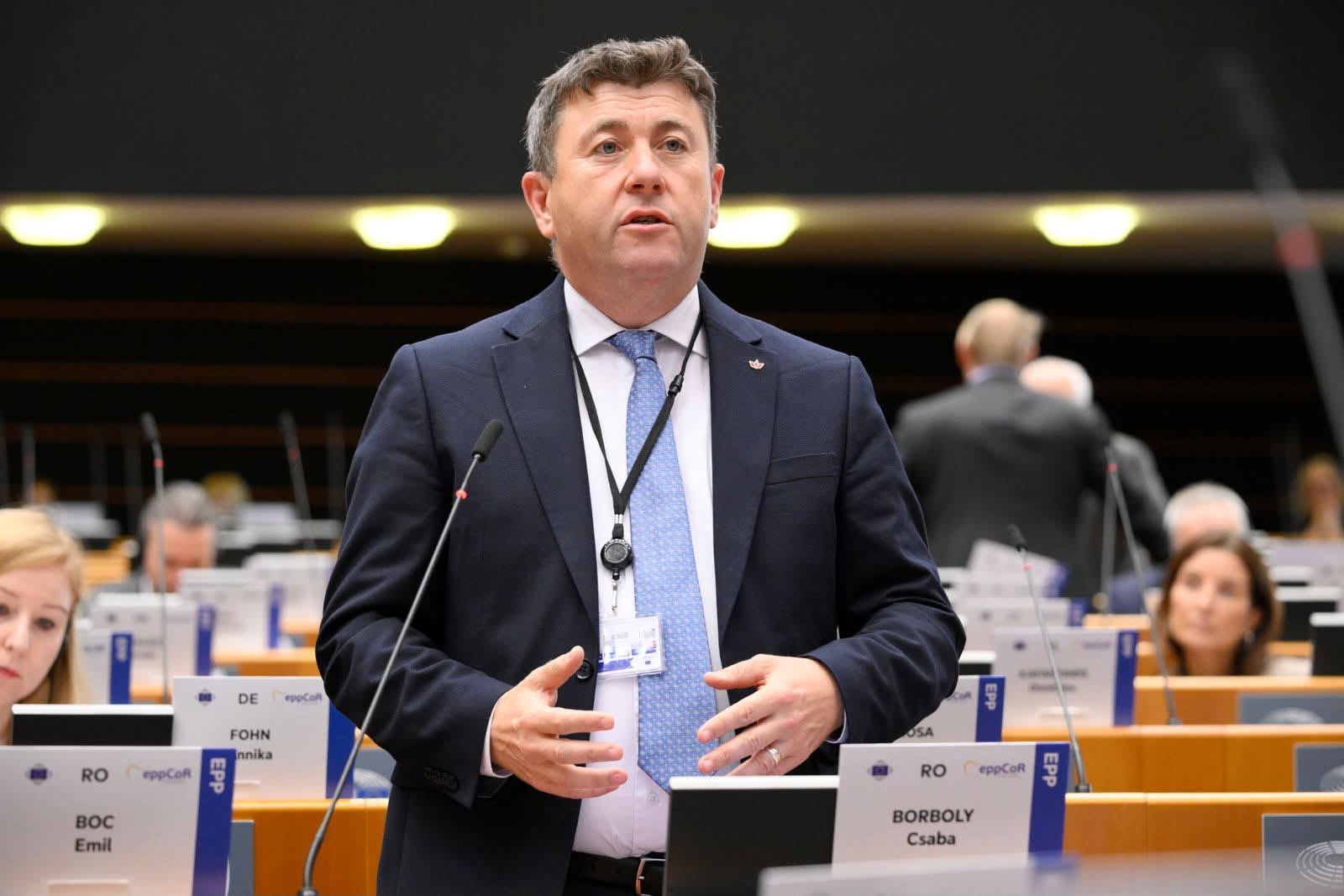
Europe cannot call its skills transition successful if people gain qualifications while their home regions lose the capacity to offer them a future. Competitiveness and cohesion must advance together. This was the message I brought to today’s European Committee of the Regions plenary debate on “Skills for the future”, presented by rapporteur-general Karolien Grosemans.
AI is changing tasks as well as occupations. Education, businesses and public institutions must adapt. But their ability to respond is unevenly distributed. Access to specialist teachers, research infrastructure, business networks and training differs significantly between major urban centres and remote communities.
This is not an argument against innovation. It is an argument for making innovation work across the Union.
A common European challenge
Free movement and the exchange of talent are European strengths. They must be protected. However, persistent one-way flows can weaken communities that invest in educating young people but struggle to offer them local career opportunities.
This is not an East versus West argument. Rural, mountain, remote and transitioning regions in both eastern and western Europe face related challenges. We should connect their experiences rather than divide the Union into places that create innovation and places expected only to supply workers.
The objective is genuine choice: the freedom to leave, the opportunity to return, and a credible option to stay.
From the European Skills Agenda to delivery
As rapporteur of the CoR opinion on the European Skills Agenda adopted in 2021, I advocated a stronger local and regional role, cooperation between education and employers, and closer links between skills and territorial development.
The immediate context has changed since the pandemic. The underlying lesson remains: individuals and small businesses cannot be expected to manage the transition alone. Employers, education providers, public authorities and social partners share responsibility.
Today I called for local and regional authorities to have the data and funding opportunities needed to connect schools, universities and businesses. Where technological change can be anticipated, workers should receive support before displacement, not only afterwards. Existing partnerships should be strengthened rather than adding another administrative layer.
The rapporteur’s response: opportunity in people’s own regions
In her closing response, Karolien Grosemans stressed that educating people is one task; ensuring they can find work and build their future in their own region is another essential responsibility. This closely reflects the message of my intervention: learning must connect with real economic and career opportunities where people live.
She also made clear that future skills extend far beyond AI. Industry, agriculture and care need well-trained professionals. Reading, writing and numeracy remain the foundation for acquiring new skills and adapting to change.
The rapporteur highlighted accessible training, workers’ involvement when AI is introduced and support for people who need additional assistance. We cannot predict exactly which jobs will exist in fifteen years, but we can equip people with knowledge, skills and opportunities to manage change.
This is meaningful policy convergence, not a funding commitment or evidence that a particular amendment has been adopted. It strengthens the case for connecting learning, investment and local opportunity in implementation.
Why amendments and political dialogue matter
Amendments submitted by different members and political groups address the practical distance between ambition and delivery. They concern linking investment plans with early skills anticipation, giving vocational institutions an effective role in designing responses, pooling support for small businesses, developing teachers’ skills and reaching people facing greater barriers to employment.
Precise wording matters because general support for training does not establish who identifies needs, who responds or how smaller employers gain access. Political dialogue is equally important: territorial evidence must become a shared European objective, supported across regional and political boundaries.
A rural region’s difficulty in accessing training is not simply a local complaint. It is evidence about whether European instruments can reach the whole Union.
Partnerships that change decisions
Regional partnerships should connect employers, vocational education providers, schools, universities, research organisations, employment services, workers’ representatives and public authorities around a limited number of strategic transitions.
The practical questions are clear. Which tasks are changing? Which investments will need new skills? Can smaller employers share training provision? Can workers access learning without unrealistic financial or travel burdens? Can teachers use new technologies critically and responsibly?
A partnership delivers value when its information changes a decision. A provider adapts a course. A small business gains access to expertise. A worker receives support before losing a job. A public administration builds the skills needed for responsible AI use.
Training alone does not create higher wages. Skills investment must connect with productive investment, innovation, economic diversification and decent working conditions. Housing, transport, digital connectivity and good public services also shape whether people can build a future locally.
European values belong at the centre
Human dignity, equal opportunity, non-discrimination and responsible technology are not obstacles to competitiveness. They are part of what makes Europe’s approach worth defending.
The transition must not reduce people to skills inventories. Literacy, numeracy, professional knowledge and critical judgement enable participation in economic and democratic life. Workers’ involvement and support for those facing additional barriers are essential to a fair transition.
The next budget is a test of real partnership
The Commission’s proposal for the 2028 to 2034 multiannual financial framework includes national and regional partnership plans connecting investment and reform. The final architecture remains under negotiation. Funding cannot be treated as guaranteed, and no general implementation extension to 2036 should be assumed.
The essential question is whether partnership will mean meaningful participation. Local and regional authorities must help shape priorities, not merely implement decisions taken elsewhere. Differences in institutional capacity must be recognised, including the support needed to prepare mature projects and lasting cooperation.
A CoR opinion is not binding legislation or a funding award. Its contribution is to bring territorial evidence into European policymaking and build support for workable solutions. National engagement and local preparation must follow.
What we owe the next generation
Young people entering adulthood now will live with the consequences of investment choices being prepared today. We should leave them more than infrastructure and policy documents. We should leave institutions that cooperate, communities that trust one another, and a Union in which opportunity is not determined by postcode.
Europe’s strength is measured not only by its leading technology centres, but also by whether its communities can participate in change and offer their young people a future. That is why this work matters across the Union.