Mountain Water Protection, Beavers and Water Security: Good Practices from Szeklerland Could Serve as an Example in Brussels
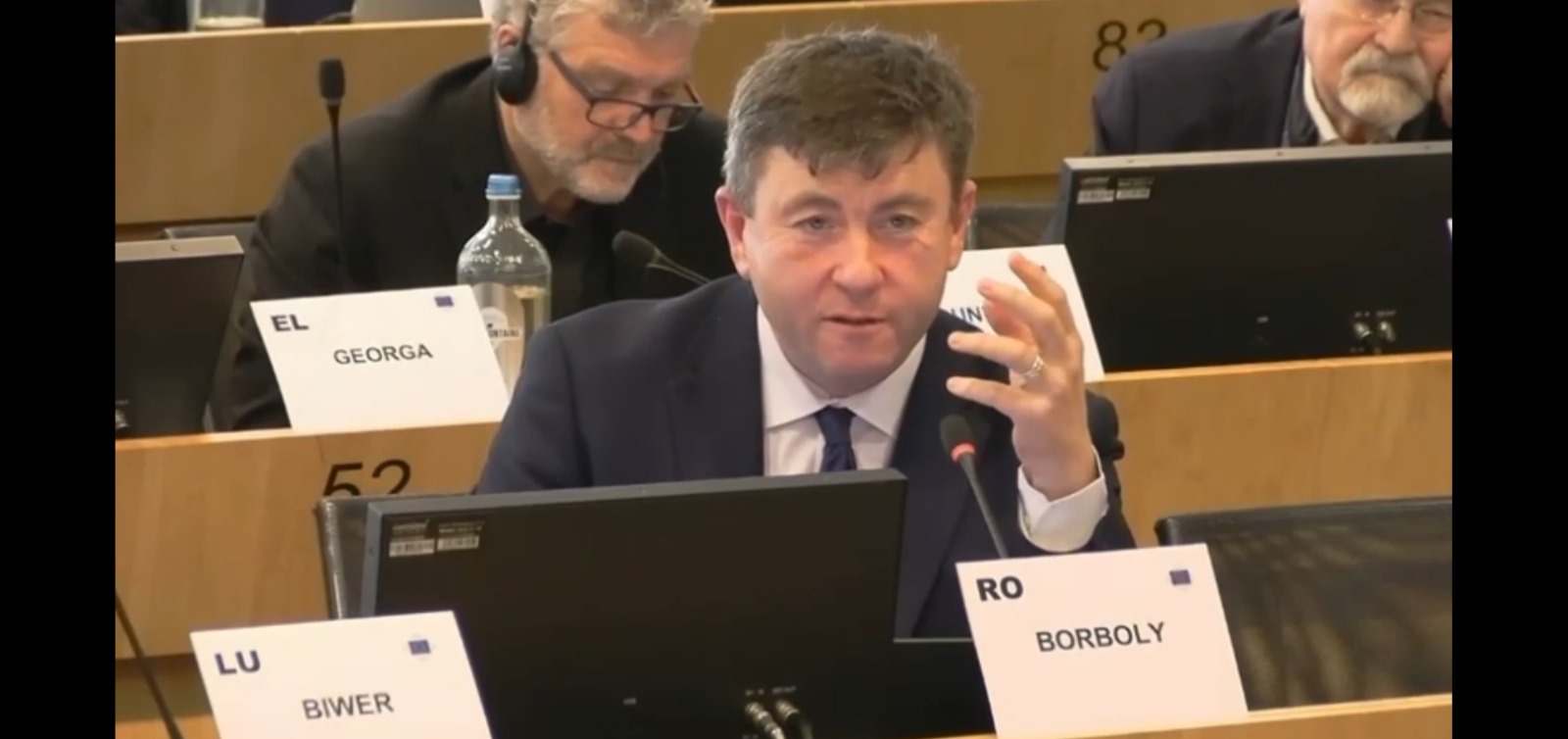
Csaba Borboly, Vice President of Harghita County Council, spoke on Friday at the ENVE commission meeting in Brussels, where the protection of mountain waters, water retention, and the management of conflicts related to beavers were on the agenda. Today’s discussions in Brussels also focused on this topic, emphasizing that water management challenges in mountain regions deserve attention at the EU level.
In his intervention, he drew on the practical experience of Szeklerland, which can provide valuable contributions to the EU’s climate and water security objectives.
Harghita County Council and its partners are currently working on drafting the Carpathian Water Resilience Framework Proposal. The document identifies the Carpathians as one of Europe’s most important “water towers”, while also highlighting that climate change, droughts, flash floods, and past river regulation interventions pose serious risks to settlements, agriculture, and ecosystems.
The framework proposal is built on several pilot micro-regions – such as the Ciuc Basin, Sândominic, or the Mădăraș area – where specific water-related issues (beaver dams, sudden flooding, inundated meadows) are mapped and jointly addressed. Local communities take part extensively in the process, from farmers and municipalities to civil society organisations.
The proposal emphasizes that there is no need for a top-down county plan but rather models tailored to local characteristics, developed at micro-regional level. Together, these form Harghita County’s contribution to the water resilience of the Carpathians. It also proposes the establishment of local water oversight committees, where local authorities, water management experts, farmers, forest and landowners, NGOs, and young people would work together to resolve water-related conflicts.
The framework also includes the development of a mountain monitoring system that would track precipitation, water flow, groundwater levels, as well as the impacts of beaver dams and flash floods. The collected data would be made accessible to the public in an easy-to-understand form.
The document is aligned with the European Climate Law, the EU Climate Adaptation Strategy, and the European Water Resilience Strategy. Its aim is to ensure that mountain regions – including Harghita County – are not left out of EU policy focus and funding opportunities. To this end, it calls for the opening of dedicated funding lines in the next EU budgetary period for mountain water resilience, nature-based solutions, beaver co-management, and local, bottom-up development projects.
The goal is for the good practices from Miercurea Ciuc and Harghita County to become reference points in Brussels and to demonstrate how communities, farmers, and young people can be effectively involved in shaping water security together.