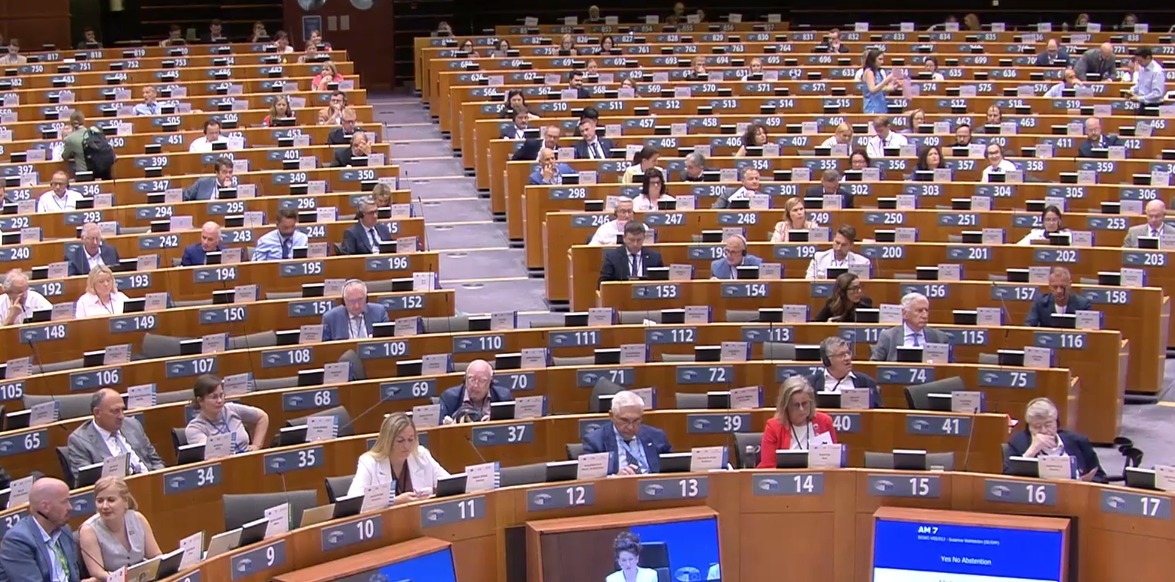
The European Social Fund 2028–2034 is being decided now. At the CoR plenary today, an opinion was adopted that incorporates amendments addressing some of the most persistent blind spots in EU social policy: mountain regions, national and ethnic minority communities, small settlements facing demographic collapse, energy poverty in cold climates, and transport poverty in areas without adequate public services. This is how those amendments were built, where they stand, and why they matter beyond any single region.
The Policy Gap This Work Addresses
The EU’s current social funding architecture contains a structural distortion. Less developed regions — as classified at NUTS 2 level — attract cohesion and social funding in theory. In practice, within those regions, funds tend to concentrate in urban centres and their immediate surroundings. Rural areas, mountain regions, peripheral small settlements and minority communities receive a disproportionately small share.
This is not a new observation. But the ESF 2028–2034 regulatory framework, as originally proposed by the Commission, did not address it with sufficient specificity. The SEDEC opinion process provided a window to close that gap.
The amendments submitted during this process sought to translate that structural problem into concrete legal text — text that can later serve as a reference point in national programme negotiations, in monitoring committees, and in the Commission’s own assessment of member state plans.
The Budget Context: What Is at Stake
The ESF+ allocation for 2028–2034 stands at 121 billion euros under the Commission’s MFF proposal — a reduction of 21.6 billion euros compared to the 142.7 billion euros allocated in 2021–2027. Within the broader National and Regional Partnership Plans framework, at least 100 billion euros are dedicated to social objectives.
This reduction makes the distributional question more urgent, not less. A shrinking envelope allocated through centralised national plans — without strong territorial earmarking or place-based conditionality — risks deepening existing disparities between capital-region clusters and the rest.
That is precisely the systemic risk these amendments sought to mitigate.
What Was Submitted and What Advanced
Committee Phase: The Substantive Proposals
The following amendments were submitted at SEDEC committee level, each targeting a specific gap in the Commission’s original proposal.
AM 50 — The right to stay and access to essential services
The right to stay — as a principle of the European Pillar of Social Rights — is meaningless without the material conditions that make staying viable. The amendment proposed that the ESF explicitly recognise access to housing, care and healthcare, affordable transport and digital connectivity as prerequisites for effective social inclusion in depopulated areas, islands and mountainous regions. NUTS 3 and LAU-level indicators were proposed to make territorial disparities visible rather than masked by NUTS 2 aggregates. The complex vulnerability of national and ethnic minority communities in these areas was also named.
AM 52 — Energy poverty in mountain and rural areas as a distinct ESF priority
Energy poverty in mountain and rural areas is structurally different from its urban form. Harsh climatic conditions, higher per-household heating expenditure, limited district heating and renewable energy networks, and low income levels combine to create a disproportionate energy cost burden. The amendment proposed that the ESF recognise energy poverty alleviation as an eligible and prioritised intervention area in structurally disadvantaged regions, with explicit coordination between ESF, ERDF and Just Transition Fund instruments.
AM 53 — Demographic collapse in small settlements
Villages and hamlets with fewer than 500 inhabitants in mountain, rural and peripheral areas face a self-reinforcing spiral: youth outmigration, ageing, school and service closures, and lack of economic opportunity. The amendment proposed targeted ESF support for youth retention measures, quality apprenticeships, local employment pathways, entrepreneurship support, digital skills development, and the retention of healthcare and care workers in these communities.
AM 29 — Social innovation and transnational cooperation
The EaSI legacy — local zero long-term unemployment models, transnational cooperation, Commission-managed social innovation strand — was proposed for explicit continuation and expansion, ensuring that tested local and regional solutions can be scaled rather than lost between programming periods.
AM 36 — Strengthened partnership principle
The amendment proposed voting rights for social and educational partners and civil society organisations in ESF monitoring committees, and a minimum 0.25% ESF contribution earmark for capacity building — particularly relevant for regions where civil society and local authorities lack the administrative capacity to compete effectively for funds.
Plenary Phase: What Advanced and What Remains Open
At plenary level, the substantive directions of the committee-phase amendments advanced — though in several cases under different authorship, which is a normal feature of the CoR legislative process.
Results confirmed in the plenary text:
Plenary AM Content Origin
AM 22 Social innovation, transnational cooperation, EaSI continuity, local job guarantee models Builds on AM 29
AM 28R Partnership principle, LRA involvement in ESF monitoring committees, capacity building resources Partial continuation of AM 36
AM 37 Energy poverty in mountain and rural areas, heating and cooling expenditure, ESF-ERDF-JTF coordination Builds on AM 52
AM 38 Demographic collapse in small settlements, youth retention, work-life balance, care workers Builds on AM 53
AM 35/36 Right to stay, housing, healthcare, affordable transport, structural disadvantage indicators Partial continuation of AM 50
Elements that remain to be fought for:
Three specific proposals did not find adequate reflection in the plenary merged text and should remain on the agenda for the national programme negotiation phase:
• Minority-language access to ESF-funded services — the principle that equal and effective access to employment support, skills training, healthcare and social inclusion measures may require minority-language delivery in certain regions.
• Sub-regional territorial indicators — a framework of common result and implementation indicators broken down by sex, age and geographical area, including sub-indicators for regions where average wages are below 75% of the national average, energy poverty is structurally elevated, or small-settlement structure makes service delivery more costly.
• Protection of the ESF social mission against flexibility mechanisms — ensuring that reprogramming provisions and emergency use clauses cannot erode the fund’s core commitments on inequalities, poverty, training, education, housing and active social inclusion.
How One Member Can Shape an EU Institution
The CoR has nearly 350 members. The question of how individual members can generate durable impact on EU legislative texts is not merely a procedural one — it is a question about the purpose and effectiveness of the institution itself.
The answer, demonstrated through this process, involves three things working together.
First, sustained and specific engagement over time. The amendments described here were not produced in isolation. They emerged from almost a year of continuous dialogue with the competent Commissioner, multiple Directors-General, unit heads, European Parliament rapporteurs, and Council Presidency officials. That dialogue shaped both the content and the framing of the proposals in ways that made them legible and persuasive to a wide range of institutional actors.
Second, translating territorial reality into legislative language. The most effective amendments are those that name a real problem precisely — not in the vocabulary of regional advocacy, but in the vocabulary of EU law and social policy. Energy poverty in mountain areas is not a complaint; it is a structural condition with measurable characteristics that can be addressed through specific eligibility rules. That precision is what makes an amendment survivable through the legislative process.
Third, the two-level strategy. CoR opinions are mandatory consultation documents in the EU legislative process. But their most direct and often most powerful effect is in national programme negotiations. A CoR opinion that names mountain regions, minority communities and small settlements as specific beneficiary categories gives national-level negotiators — including those from governing coalition partners — a documented EU-level basis for advocating corresponding earmarks in national operational programmes. The CoR text and the national programme negotiation reinforce each other when used together.
The Housing Dimension
Affordable housing is emerging as one of the most significant gaps in the current EU social funding architecture. The Commission’s own analysis estimates the EU-wide housing investment gap at 270 billion euros per year. In peripheral and mountain regions, this gap combines with energy inefficiency, low incomes and ageing building stock to produce housing poverty that is both severe and statistically invisible at NUTS 2 level.
The plenary amendments AM 35/36 introduced affordable housing and homelessness metrics into the right-to-stay framework. This is a foundational step: it creates the conceptual and legal hook for ESF-funded housing support in structurally disadvantaged regions, to be operationalised through national programme design.
A concrete action plan at county or regional level — ready to be submitted as input into the national operational programme — is the logical next step. Without such a plan, the legal opening created at CoR level will not translate into actual allocations.
Transport Poverty: A New EU Concept
Transport poverty — the condition in which individuals are unable to access employment, healthcare or public services due to unaffordable or absent transport options — was introduced as a formal EU policy concept during the Social Climate Fund negotiations. Its recognition matters because what is unnamed in EU vocabulary tends to be unfunded.
In mountain and rural regions with dispersed settlement patterns, transport poverty is both widespread and structurally caused. Its explicit recognition as an ESF-relevant condition opens the door to targeted programming — but only if member states and regions choose to use that opening in their operational programmes.
What the Adoption of This Opinion Changes
The adoption of the SEDEC opinion on ESF 2028–2034 changes three things in the legislative landscape.
First, the CoR’s formal position now includes explicit recognition of mountain regions, minority communities, small settlements, energy poverty in cold climates, transport poverty and the right-to-stay principle as ESF priorities. This creates a reference document that national delegations, civil society organisations and regional authorities can cite in negotiations with their central governments.
Second, the concepts introduced and argued for in this process — including transport poverty, the distinct nature of mountain energy poverty, and minority-language access to social services — are now part of the documented CoR position. Even where specific amendments did not survive into the final text, the arguments have been made on the record. That record matters in the trilogue phase and in subsequent Commission guidance documents.
Third, the process has demonstrated that place-based, minority-sensitive, territorially specific social policy is not a marginal interest. It is a mainstream concern of the EU’s assembly of regional and local representatives. That framing is itself a political result.
The Window That Remains Open — and For How Long
The ESF 2028–2034 regulation is moving toward final adoption. Simultaneously, member states are beginning to prepare their National and Regional Partnership Plans and the embedded operational programmes. This is the phase in which the distributional choices are actually made — and it is the phase with the shortest effective window for regional and local influence.
Regions and regional authorities that enter this phase with ready-made action plans, evidence-based territorial analyses and clear asks aligned to the CoR opinion will be better positioned to secure earmarks and programme conditions that serve their specific needs. Those that do not will find themselves receiving what the central allocation model produces by default.
The CoR opinion is the framework. The national programme negotiation is where it becomes money. And the time to act on that connection is now.
Csaba Borboly, Vice-President of Harghita County Council, Second Vice-President of the SEDEC Commission, European Committee of the Regions
Brussels, July 2026