Message from Brussels: Hunting is not romanticism — it is food, nature, and a billion-euro economy. Csaba Borboly in the European Parliament
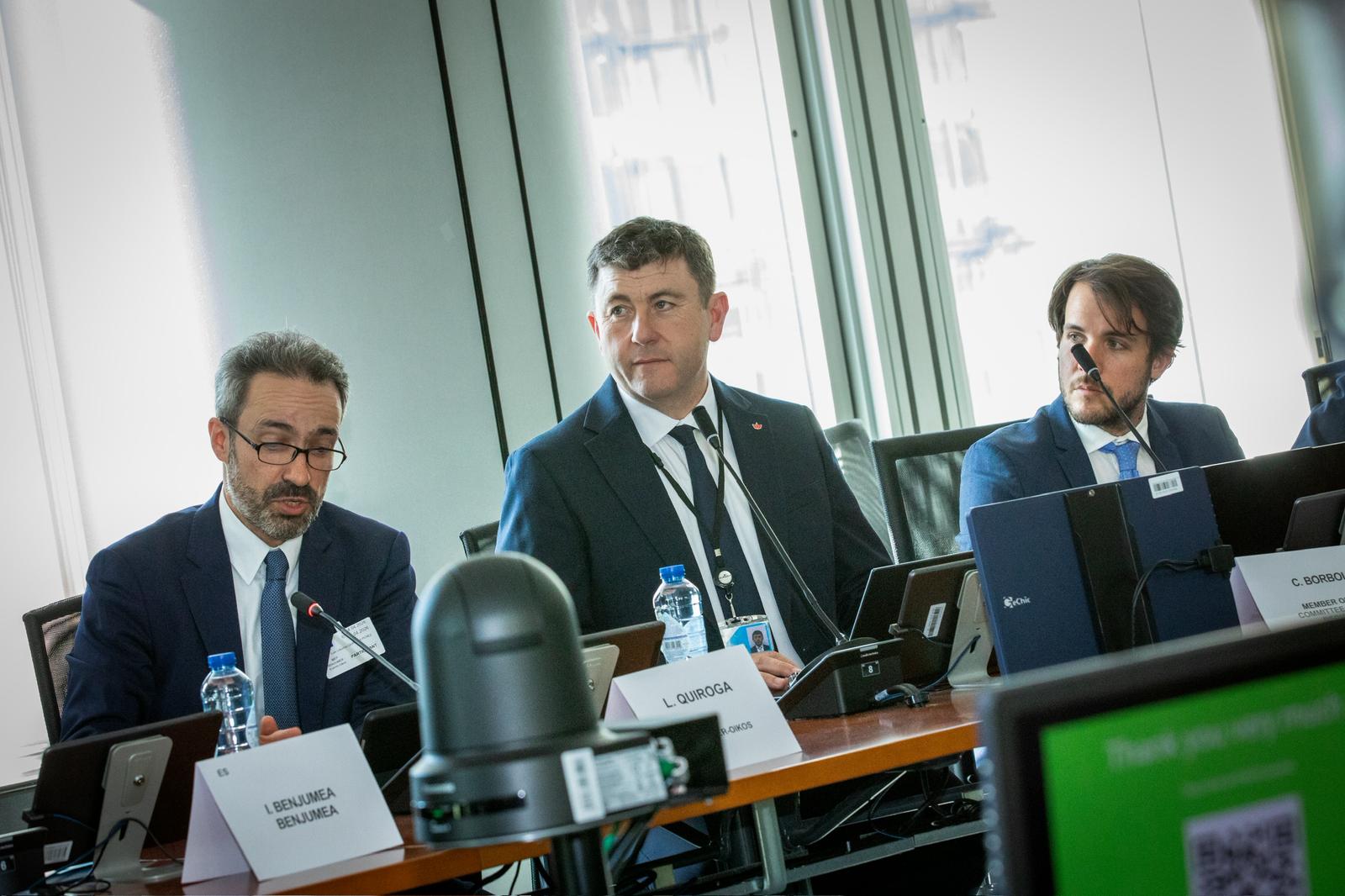
On April 14, 2026, a high-level event took place in the European Parliament building in Brussels. During a roundtable organized by the Spanish think tank OIKOS and the organization Legados, hosted by MEP Isabel Benjumea — Vice-Chair of the European Parliament’s Intergroup on Biodiversity, Hunting, and the Countryside — participants discussed the economic and ecological role of hunting in Europe.
Among the participants was Csaba Borboly, member and rapporteur of the European Committee of the Regions, Vice President of the Harghita County Council, and President of the Intercommunity Development Association for Rural Development in Harghita County. Several Members of the European Parliament also took part in the debate, including Loránt Vincze, RMDSZ/UDMR MEP.
Hunting is not romanticism. It is economy, nature, and circularity.
Researchers from OIKOS analyzed hunting practices in seven EU Member States and the United Kingdom — their conclusion is clear: hunting is a strategic tool of the rural economy, and where it is regulated and science-based, it simultaneously contributes to biodiversity, local livelihoods, and public safety.
The figures speak for themselves: in Northern Europe, game meat accounts for 13% of the food market, while in Romania — home to the largest brown bear population in the EU — this share is only around 2%. This is not a conservation success, but rather waste and lack of organization — while poaching and illegal methods destroy a nature-based economic circuit with a potential worth hundreds of millions of euros.
What is the situation in Romania — and what have we done about it?
Harghita County is one of the regions with the highest density of large carnivores in the European Union. The reality: every year there are numerous conflicts, poisonings, traps, and illegal shootings — because legislation does not provide effective protection, the compensation system does not function, and Bucharest lacks the political will to address the problems of rural communities, especially in Transylvania.
UDMR is the only party in Romania that consistently represents this issue in Bucharest. USR, PNL, and PSD consistently avoid the topic. Csaba Borboly, as part of the UDMR team — and as rapporteur of the European Committee of the Regions — carries out work in Brussels that supports what progresses only with difficulty in Bucharest: normalization.
What does the Regional Platform for Large Carnivores in Harghita propose?
The Regional Platform for Large Carnivores, developed with the active participation of Harghita County — a pilot project funded by the European Parliament and referenced by the ENVE Committee — proposed an Action and Implementation Plan in 2025. The proposals are clear:
Active population management based on science — with quotas, professional game managers, and biologists
Revision of protection status where overpopulation generates persistent safety risks
A dedicated EU-level funding mechanism within the 2028–2034 Multiannual Financial Framework — with direct access for regions
The three proposals we are taking forward
Reclassification of the brown bear from Annex IV to Annex V of the Habitats Directive, similar to the process initiated for the wolf in December 2024 — from “strictly protected” to “protected.” Data from Romania indicate a brown bear population significantly exceeding ecological carrying capacity.
Strict application of the derogation system — the Commission should initiate infringement procedures if Romania fails to properly apply Article 16 of the Habitats Directive.
Mandatory compensation at EU level — cohesion and agricultural funds must be conditional: without proven compensation, there is no EU funding.
The direction is clear: safety, science, and real wildlife management. We do not stop — we move forward.