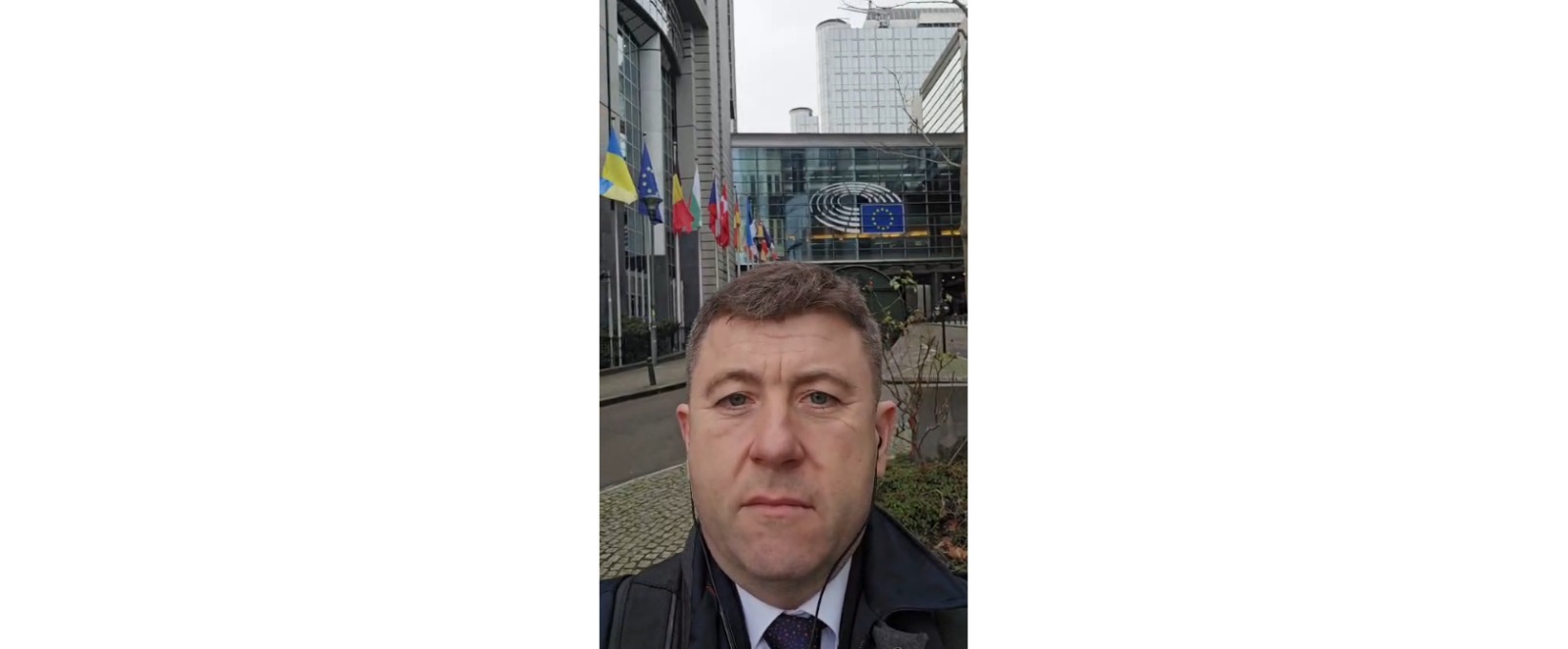
I was not just “in” Brussels – I was working in Brussels for AgoraEU
Today I held targeted bilateral meetings in Brussels in my capacity as AgoraEU rapporteur, with the aim of ensuring that the programme currently under preparation provides real access and funding for culture, heritage protection, independent media, and the civic sector that holds communities together – especially for smaller actors and less visible regions.
The stake is simple: within AgoraEU, money should not produce paperwork, but keep people, communities, and values alive. Today was about making sure that the programme is not accessible only to large players and central hubs, but also to those working on the ground: cultural organisations, institutions, artists and independent creators, heritage professionals, independent media, as well as civic organisations representing young people and communities.
And yes: this is also a personal matter.
In Gyergyócsomafalva, from Miklós Köllő, I learned that we do not allow the townscape and valuable built heritage to deteriorate. Heritage is not the “past” – heritage is the foundation of a community’s future.
Who did I consult with today in institutional bilateral meetings?
According to the official note, today’s meetings were held separately with the following institutional actors:
· Culture Action Europe (CAE)
· European Economic and Social Committee (EESC)
· European Broadcasting Union (EBU)
· Europa Nostra
· European Commission – DG JUST (Directorate-General for Justice and Consumers)
What did we achieve today? Confirmed, concrete results
1) Partners confirmed that their comments have been incorporated into the draft.
According to the note, participants provided a positive and supportive overall assessment of AgoraEU and explicitly indicated that their proposals and recommendations are reflected in the text; the consultation delivered tangible policy results.
2) Shared position: continuing national “desks” and contact points is essential.
There was broad agreement that these structures should continue to operate as national contact points under AgoraEU, as they ensure access, guidance, and outreach – particularly for smaller organisations and applicants with limited administrative capacity.
3) Strong support for the continued funding of small, grassroots projects.
According to the note, supporting small projects is important across all strands of the programme, and this can be effectively achieved through re-granting and two-stage application procedures, as these reduce administrative barriers and provide real access for cultural and civic actors.
4) Cultural rights must not remain “between the lines.”
Partners stressed that cultural rights must be explicitly named within the programme, including the right of access to culture and cultural heritage, as well as the right to cultural creation.
5) Territorial balance: concrete solutions are needed to address unequal access.
Discussions focused on persistent inequalities in access between regions and within Member States; the programme must contribute to more balanced participation and provide full access to less represented regions – including rural and peripheral areas.
How are these points already reflected in the CoR draft report?
The draft report sets out, at several points, the same direction confirmed by today’s consultations:
· Protecting small municipalities and small organisations from excessive administrative burdens: complex funding procedures can impose disproportionate burdens; therefore capacity-building, simplified support schemes, and local AgoraEU contact points are needed.
· Heritage protection – especially built heritage – with independent weight: the draft states that cultural heritage and heritage protection should be treated as a distinct policy strand, explicitly referring to Europe’s diverse built heritage.
· Targeted support for independent / local and regional media: the draft calls for dedicated, ring-fenced funding schemes for local and regional media production and journalism, proportionate to their role.
· Addressing territorial inequalities through targeted consultation: based on lessons learned from previous programmes, the draft urges targeted consultations with regional and local authorities to ensure the programme functions effectively in all regions.
· A budget commensurate with ambition: the draft calls for the total AgoraEU budget to be planned at at least double the current level.
What is the next step?
According to the draft report, the document will be discussed at the SEDEC meeting (2 February 2026); the deadline for submitting amendments is 20 January 2026, 15:00 (Brussels time), and plenary adoption is scheduled for 5–6 May 2026.
My message in one sentence:
AgoraEU will be a success only if funding reaches rural areas and smaller actors as well – culture, heritage protection, independent media, and the civic sector that builds communities. Today’s work in Brussels gave this effort strong, confirmed momentum.
Brussels, 15 January 2026