Over the past months, I have been working on one of the most significant pieces of European Union legislation: the Global Europe Regulation, the framework through which the European Union will finance enlargement, neighbourhood policy, and cooperation with various regions of the world to the tune of approximately €200 billion over the coming decade. This is more money than ever before — and there was an opportunity to have a say in who gets access to it and how.
Where Did We Start?
The European Commission published the original proposal for the Global Europe Regulation at the end of 2025. We read it carefully, and the problem was immediately apparent: the text spoke almost exclusively to EU member states and the central governments of partner countries. The role of local and regional authorities, district-level bodies, small towns, and municipalities was virtually invisible in the draft.
This is not a minor technical issue. If the regulation were to remain as drafted, the money would flow to capitals, ministries, and large project implementers — but it would never reach districts, twin-city partnerships, or local economic cooperation networks. Harghita County, as a mountainous, border, rural region with a Székely majority, would once again be left out of this instrument as well.
That is when we decided to submit amendments. With the help of my team, we got to work — and I am grateful to everyone who contributed.
The First Step: Committee-Stage Amendments
On 24 March 2026, I submitted four amendments to the draft opinion on the Global Europe Regulation in the CIVEX committee of the European Committee of the Regions. The rapporteur was a Croatian socialist politician — not a colleague from my own political side. Nevertheless, the European People’s Party and the conservatives supported me, and all four of my amendments were adopted.
My first adopted amendment inserted into the text that local and regional authorities are strategic political actors in the EU’s external action, particularly in rural, mountainous, border, and minority regions. This is not an empty phrase. If a piece of legislation does not specify to whom it applies, those entities can be excluded at the implementation stage. We have now named Harghita County’s type of region in European law.
My second adopted amendment stated that small-scale, simplified application mechanisms are needed through which local authorities in rural, mountainous, border, and minority regions can participate directly in EU external programmes. It is not enough for the money to enter the country — it also needs to reach districts and villages.
My third adopted amendment stated that trade agreements and investment programmes financed through the Global Europe instrument must not undermine local producers, smallholder farmers, or rural communities, either within the EU or in partner countries. Local and regional authorities must be involved in impact assessments. This is of particular importance for the smallholder farmers and traditional producers of Harghita County.
My fourth adopted amendment introduced the requirement that the preparation of multiannual indicative programmes must include a territorial and multi-level governance filter, with particular attention to rural, mountainous, border, and minority regions. This means that a major EU programme cannot pass without an assessment of its impact on regions such as ours.
The Second Step: Plenary Amendments
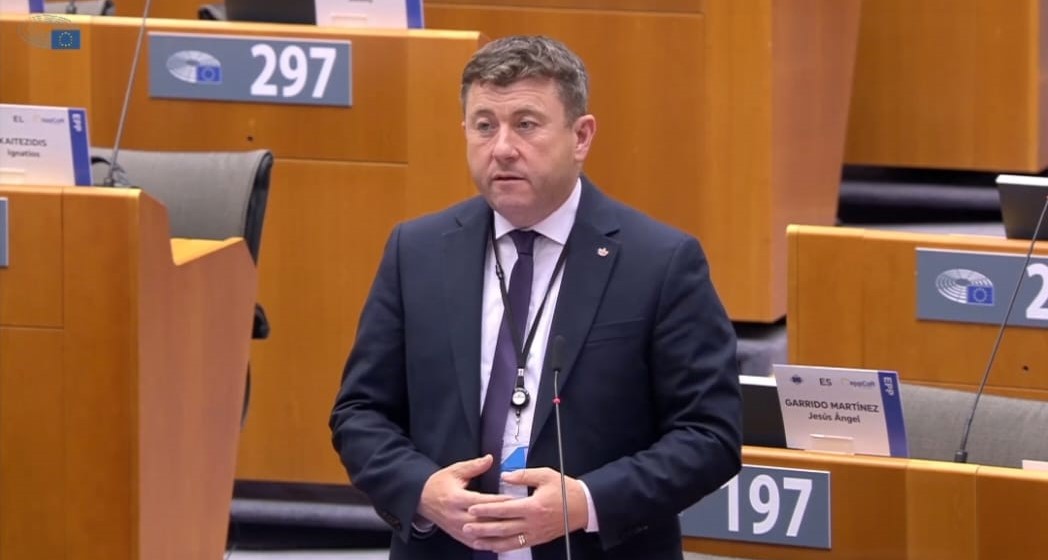
Following the committee-stage success, I also submitted amendments at the 172nd plenary session, as co-author alongside Árpád-András Antal, János Ádám Karácsony, Attila Kiss, Raymund Kovács, and Anna Magyar. The aim was to reinforce the committee-stage results at plenary level and, where possible, to deepen them further.
The rapporteur gave a positive recommendation to one of the plenary amendments — the one on minority protection. It states that the protection of national and linguistic minorities according to European standards must be a mandatory and explicit element of the EU’s enlargement conditionality framework, placed alongside fundamental rights and the rule of law. This addresses a longstanding gap: while this was theoretically included in the Copenhagen Criteria, it was consistently omitted from specific legislative texts.
The rapporteur responded negatively to the other plenary amendments, but we submitted them nonetheless, because the principles are important and we will return to them. These amendments would make consultation with local authorities mandatory during programming, ensure direct, unfiltered access to financial resources, make territorial impact assessments public, and open a twin-region window under pre-accession programmes.
Why Is This Particularly Important for Harghita County?
Harghita County is not an average region. It is mountainous, rural, border, and home to the Székely community — Romania’s most distinctive minority. This combination means that we are automatically excluded from many EU instruments when the rules are designed only for large cities and central authorities.
Global Europe is particularly important because it finances enlargement: the accession processes of Ukraine, Moldova, Serbia, Georgia, and the Western Balkans. Harghita County has natural allies, twin counties, and kinship ties in these countries. Let us think of Berehove and Transcarpathia, and of the Hungarian-inhabited areas of Moldova.
If Global Europe operates only at the national level, these connections are good for little more than visits. But if the amendments I have proposed come into effect, a concrete opportunity opens up for Harghita County and similar regions to build genuine economic cooperation with comparable regions in neighbouring countries. Joint enterprise programmes, vocational training exchanges, links between local small and medium-sized enterprises, and joint applications to EU pre-accession funds are all instruments that a district-level authority can access — if the rules permit it.
Twin-county relations are not just about hosting delegations. One of my proposals is the creation of a so-called inter-regional resilience window within EU programmes, through which Harghita County could apply directly to establish joint economic development programmes with local authorities in Transcarpathia, Moldovan regions, or the Western Balkans. This is EU funding — not visit funding: infrastructure, business support, vocational training, digitalisation, local food systems.
The Bosnia and Herzegovina Working Group and Other Accession Countries
I chair the Working Group on Bosnia and Herzegovina within the European Committee of the Regions. This is not a ceremonial role. The working group addresses how the EU can help strengthen the local government system in a country where territorial and ethnic fault lines generate political deadlock on a daily basis.
My experience here is direct: in accession countries, the main obstacle is not that capitals lack sufficient funds or political will. The main obstacle is that local authorities, districts, and small towns are not equipped to apply EU rules, lack the capacity to write grant applications, and have no direct channels to EU institutions.
I see this problem in exactly the same way from the perspective of Harghita County as from the perspective of municipalities in Bosnia and Herzegovina. The solution is not to give more money to central governments. The solution is to create direct channels, simplified instruments, and structured region-to-region cooperation frameworks.
If these mechanisms can be embedded in the final text of the Global Europe Regulation, Harghita County will be able to open the doors of cooperation not only towards Bosnia and Herzegovina, but also towards Ukraine, Moldova, and Serbia. This means that a local government professional from Harghita travels to Zagreb, Sarajevo, or Berehove not for a protocol visit, but because they are working on a joint project with European funding behind it.
The Response I Never Received
On this subject, I have forwarded several written proposals to the President of the Harghita County Council. To this day, I have not received a single substantive reply.
I say this not as a personal grievance. It is a serious institutional problem.
If the Harghita County Council does not respond to the opportunities offered by CoR membership, we lose the chance to refine my amendments on the basis of actual local needs. We lose the opportunity to embed the county’s specific twin-county relationships, specific economic ideas, and specific development priorities into European-level texts.
Moreover, through the RMDSZ’s role in government, there is an opportunity to make our voice heard at the level of the European Council and the Romanian government on issues that are strategically important for Harghita County and the Székely community: minority rights, cross-border cooperation, and the situation of Hungarians living in accession countries. This channel must be used — not hidden behind. Not because we are a small county, but precisely because for small counties, these channels are the only means by which we can matter in European decision-making.
Why Now, and What Does This Mean for All of Us?
The European Union has just shifted course. Global Europe is the first large-scale external action instrument that, in the text of the regulation itself, acknowledges that local and regional authorities have a strategic role, that rural, mountainous, border, and minority regions deserve special attention, and that multi-level governance is not an option but an expectation.
This would not have happened on its own. It is in the text because we put it there.
There are €200 billion in this framework. More money than ever before, a more open regulatory framework than ever before, and a greater opportunity than ever before for a county like Harghita to find allies and, together with those allies, bring resources home. So that young people have a reason to stay and build a business here. So that the Székely farmer is not the loser of any international agreement. So that mountain villages do not fall behind in infrastructure and services.
If we seek allies, we will find allies. Harghita County does not need to stand at the back of the queue. This is what I do in Brussels — and for that, I thank my team for their work.
Csaba Borboly Member of the European Committee of the Regions Vice-President of the Harghita County Council Chair of the CoR Working Group on Bosnia and Herzegovina