Freedom to move, freedom to stay
European mobility is an achievement. It allows young people to study, work and gain experience across borders. But mobility cannot be considered fully free when leaving home is the only realistic path to decent work, affordable housing, accessible services or professional development.
A youth dialogue linked to the 2026 State of the European Union debate examined where current policies connect with real life and where support breaks down. Participants did not ask for another list of programmes. They asked for a coherent path from education to first professional experience, from retraining to employment, and from mobility to a realistic opportunity to return.
There cannot be two Europes
Europe cannot accept one future for young people in prosperous metropolitan areas and another for those living in rural, mountainous, border and demographically declining regions. The same European values must be tangible on both sides of the continent. Cohesion is credible only when place does not determine whether a young person can begin an independent life.
The discussion confirmed that housing, skills, first employment, transport, entrepreneurship, family life and access to services cannot be treated as isolated policy fields. Young people do not organise their lives according to funding instruments or administrative competences. European and national programmes must therefore be able to support a connected life pathway.
Four messages for EU planning
First, regions and local communities must have a meaningful role in shaping National and Regional Partnership Plans. Participation should begin when needs and expected results are defined, not after the main decisions have been taken.
Second, the future EU framework should allow coordinated support for first work experience, short retraining, housing, mobility, mentoring and local employer needs, particularly in rural, mountainous, peripheral and minority-inhabited areas.
Third, results must be measured territorially. Absorption rates and participant numbers do not show whether a young person found stable work, secured housing, built a viable business, stayed in the region or found a realistic route home.
Fourth, European mobility should not become a one-way flow. EU policy should preserve connections with home regions and support return when young people choose it.
Local dialogue as a European method
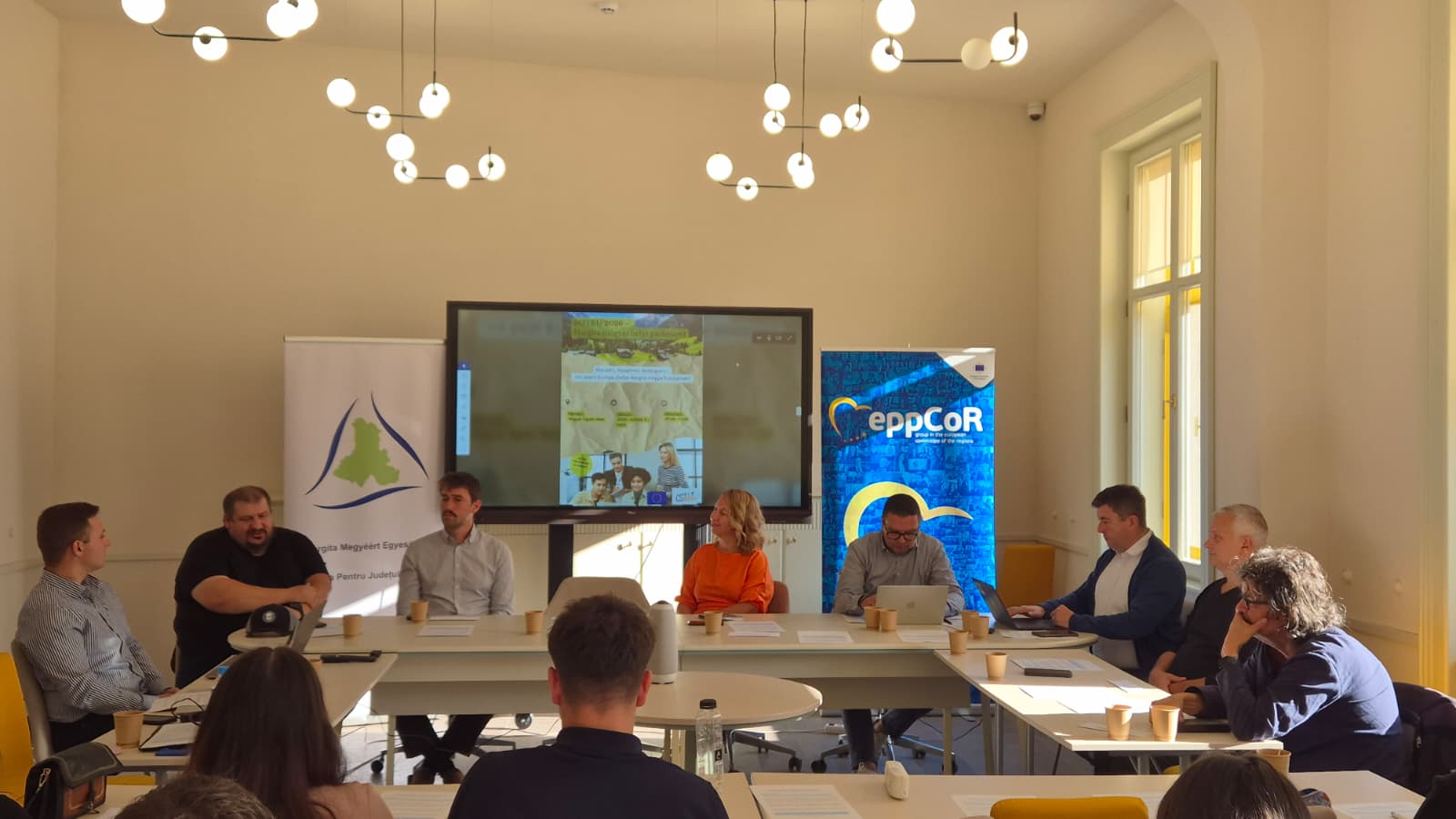
The dialogue held in Miercurea Ciuc offers a method that can be used across Europe. Young people describe concrete life situations. Institutions respond with evidence and clarify their responsibilities. Local, national and European recommendations are then built from the points where the support chain fails.
“Young people should not be required to adapt to fragmented programmes. Programmes must be adapted to the real lives of young people,” said Csaba Borboly, Vice-President of Harghita County Council and Member of the European Committee of the Regions. He will bring the recommendations into national discussions and his work in the European Committee of the Regions.
Partnership and next steps
The contribution of the young participants, the Ciuc Area Youth Council, CSTIT, public institutions, local authorities, experts and employers made it possible to identify challenges more accurately. The next phase will focus on evidence, one feasible pilot approach and a concise set of recommendations for Romanian and European decision makers.
Participants: Csaba Borboly, Vice-President of Harghita County Council and Member of the European Committee of the Regions; Béla Bors, Deputy Mayor of Miercurea Ciuc; László Bara, President of the Ciuc Area Youth Council (CSTIT) and Deputy Mayor of Plăieșii de Jos; Tiberiu Pănescu, Executive Director of the Harghita County Employment Agency (AJOFM Harghita); Dezső Sorin Márk, President of the Harghita County branch of Patronatul Român; Sándor Koronka, representative of the Harghita County Directorate for Sport; Dr Orsolya Gergely, sociologist and university lecturer at Sapientia Hungarian University of Transylvania, Miercurea Ciuc; as well as young participants and representatives of local institutions and organisations.
Europe does not need to choose between mobility and belonging. It must protect both. Leaving should remain an opportunity, returning should have a real path, and staying should be a dignified choice in every European region.