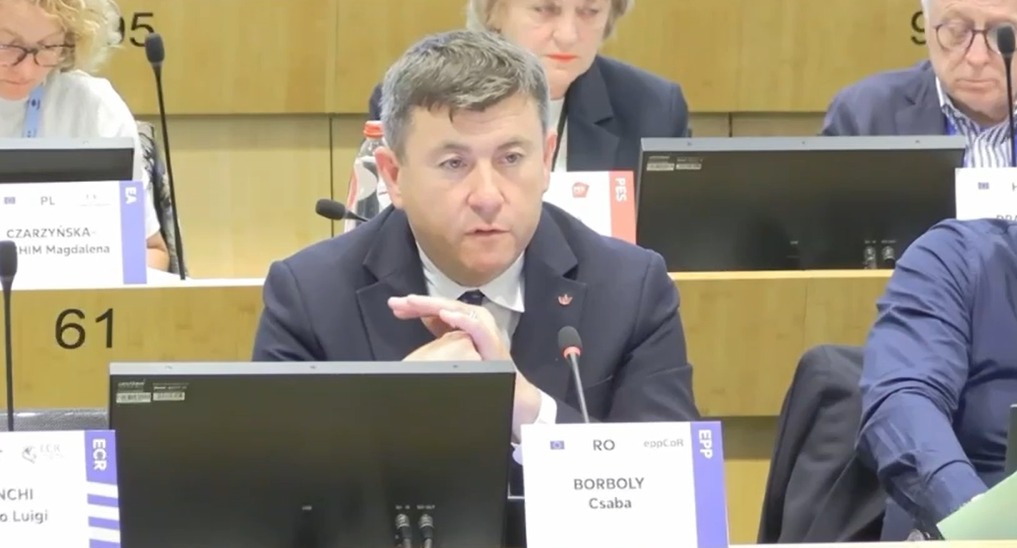
Artificial intelligence, digitalisation and the green transition are reshaping work across Europe. At the meeting of the European Committee of the Regions’ SEDEC commission, I argued that Europe must respond to these changes as one Union.
We cannot accept two Europes: one where people and regions shape technological change, and another where they merely face its consequences.
One Europe, not two
The future of skills is a question of cohesion as much as competitiveness.
Access to universities, specialised teachers, innovation infrastructure, quality connectivity and training opportunities remains uneven across Europe. If these territorial differences are ignored, technological change can deepen existing divides between east and west, capitals and smaller cities, strong innovation centres and rural or remote communities.
European solidarity means giving every region the capacity to participate. Equal access on paper is not enough when local institutions have different levels of staff, expertise, infrastructure and room to experiment.
The principle that no region should be left behind must therefore guide implementation from the beginning.
Skills policies must reflect regional realities
There is no single European skills reality. Employers, learners and local barriers differ from one territory to another.
European action should therefore start from regional evidence and connect labour market information with technological change, investment, demographic trends and regional economic transformation.
Local and regional authorities can bring employers, schools, vocational education providers, universities, employment services, social partners and citizens around the same table.
I support permanent regional skills partnerships and early warning systems that can identify change before workers lose their jobs and before local businesses fall behind.
Shared responsibility in the age of AI
Not everyone needs to become a programmer or an AI specialist. Everyone does, however, need the knowledge and judgement to understand what artificial intelligence can and cannot do, assess its results critically, recognise risks, protect data and use technology responsibly.
Human responsibility, professional expertise, non-discrimination and fundamental rights must remain at the centre.
Lifelong learning cannot be placed on individuals alone. Employers, workers, public authorities, education providers and social partners all share responsibility.
Teachers and trainers need sustained support, while small and medium-sized enterprises need access to shared expertise, training and technological infrastructure that they often cannot organise alone.
Connecting east and west
Europe does not need parallel solutions developed in isolation.
Regions should connect complementary strengths, develop training programmes together and share teachers, expertise and infrastructure across borders. Cooperation between eastern and western regions can turn Europe’s diversity into practical capacity.
Talent mobility is a European strength, but one-way flows can weaken the communities that educated their young people.
Europe should therefore also support talent circulation, return opportunities, remote cooperation and stronger links between regional innovation ecosystems and their diasporas.
From European ambition to local delivery
The European dimension is essential. Cohesion policy, education, innovation, industrial policy and digital programmes should work in the same direction.
Successful partnerships need continuity beyond short-term projects, while regions with weaker ecosystems need capacity-building so that they can use European opportunities effectively.
The Committee of the Regions can bring practical local evidence into European decision-making.
My message in Brussels was clear: let us preserve our common values, connect our regions and build the future of skills together.
Europe will be stronger when every region can learn, adapt and contribute.