Csaba Borboly presents five proposals to the European Parliament — co-rapporteurs back the cause of rural and minority communities
Brussels, 26 February 2026
Csaba Borboly, Vice-President of Harghita County Council in Romania, held a bilateral meeting this morning at the European Parliament with the two co-rapporteurs for the AgoraEU programme. Emma Rafowicz, French socialist MEP, and Alice Kuhnke, Swedish Green MEP, received the five proposals presented on behalf of the European Committee of the Regions with openness and support. The meeting produced agreement on the main issues, and Csaba Borboly is confident that these points will be integrated into the European Parliament’s final report.
What is AgoraEU?
AgoraEU is the European Union’s major new programme for 2028–2034, bringing together support for culture, media, civic participation and European values into a single framework. The programme’s budget exceeds €8.6 billion — the European Parliament is pushing for even more, proposing €12 billion.
This programme will determine, over the next seven years, which cultural events, local media outlets, civic organisations, festivals, town-twinning programmes and minority cultural initiatives the European Union supports. In simple terms: it will be the backbone of Europe’s cultural and values-based budget.
Why does this matter for Harghita County?
Under previous programmes, rural, peripheral and minority regions were significantly disadvantaged. Application procedures were complex, the competition was dominated by organisations in large capitals with professional grant-writers, and most funding flowed to major cities. Csaba Borboly’s mandate as rapporteur aims to change this.
The five proposals
1. Bringing back town-twinning and county partnerships
The European Commission’s original proposal dropped town-twinning entirely from the regulation. This would have meant that one of the most successful and direct forms of European cooperation — where a town organises youth exchanges, cultural festivals or joint projects with another European town — could have lost its funding.
Csaba Borboly’s proposal: town-twinning and networks of towns should be reinstated in the legislation with dedicated funding, paying particular attention to smaller municipalities and rural areas. The parliamentary co-rapporteurs agreed on the importance of this proposal.
2. Simpler applications for small organisations
A village cultural association, a local newspaper or a civil society organisation operating in a minority language cannot compete today with professional grant-writing offices in European capitals. The system helps the big players and excludes the small ones.
Csaba Borboly proposed three concrete changes:
· Two-step applications: first, only a short concept note is submitted. Only those who pass the first screening prepare a full application. This saves an enormous amount of unnecessary work.
· Micro-grants through local intermediaries: city networks or local government associations would redistribute smaller amounts to grassroots actors.
· Proportional co-financing: for small-scale actions, own contributions should be capped, with the possibility of covering them through national or regional co-financing.
3. Territorial monitoring — finally measuring where the money goes
Until now, nobody has systematically tracked which regions EU cultural funding reaches and which are left behind. Csaba Borboly’s proposal: the regulation should require territorial participation indicators — regularly measuring and publishing how urban and rural areas, developed and disadvantaged regions, benefit from the programme.
Additionally, evaluation panels should include regional experts — not only jury members based in national capitals.
4. Explicitly naming national, ethnic and linguistic minorities in the legislation
The Commission text mentions Roma — rightly so — but does not name other national, ethnic or linguistic minorities. Yet Article 2 of the EU Treaty and Article 21 of the Charter of Fundamental Rights protect all minorities.
Csaba Borboly’s proposal: the words “ethnic, national and linguistic minorities” should be inserted into two key provisions of the regulation — the preamble on non-discrimination and Article 7 on equality objectives.
This does not create new rights — it simply makes visible what the Treaties already guarantee. The cultural projects of Harghita County, as well as those of Basque, Catalan, Sámi, South Tyrolean and many other European communities, would thus clearly fall within the programme’s target group.
5. Local authorities should be partners, not just applicants
In Europe, around 60% of public cultural infrastructure — theatres, libraries, museums, festivals, local media — is managed by local and regional authorities. Yet in the governance of EU cultural programmes, they are largely invisible.
Csaba Borboly’s proposal: the regulation should explicitly recognise local and regional authorities as partners in programme design, implementation and monitoring. Furthermore, National Contact Points should have a mandatory territorial mandate: they should serve not just the capital city, but the entire country, including rural and peripheral areas.
European Capitals of Culture also discussed
During the meeting, Csaba Borboly raised that the European Capitals of Culture (ECOC) programme appears in the new regulation only in a footnote. He proposed that ECOC be clearly named in Article 4 — cities preparing their bids need legal certainty. The current cycle runs to 2033, but continuity must be clearly ensured in the new regulation.
What comes next?
· May 2026: The Committee of the Regions plenary session votes on Csaba Borboly’s draft opinion.
· June 2026: The draft report will be presented in the European Parliament’s CULT committee — the points discussed today are expected to be included.
· Autumn 2026: European Parliament plenary vote.
Csaba Borboly: “Europe’s strength lies in its diversity”
“Today’s meeting was important because I could feel that the Parliament’s co-rapporteurs understand and support what we stand for. We agreed on the main issues, and I am confident that these points will be built into the final report. This would mean that the voice of Harghita County and every similar European region will be present in the legislation that will shape Europe’s cultural future for the next seven years. Because Europe’s strength lies in its diversity — and diversity lives where we live.”
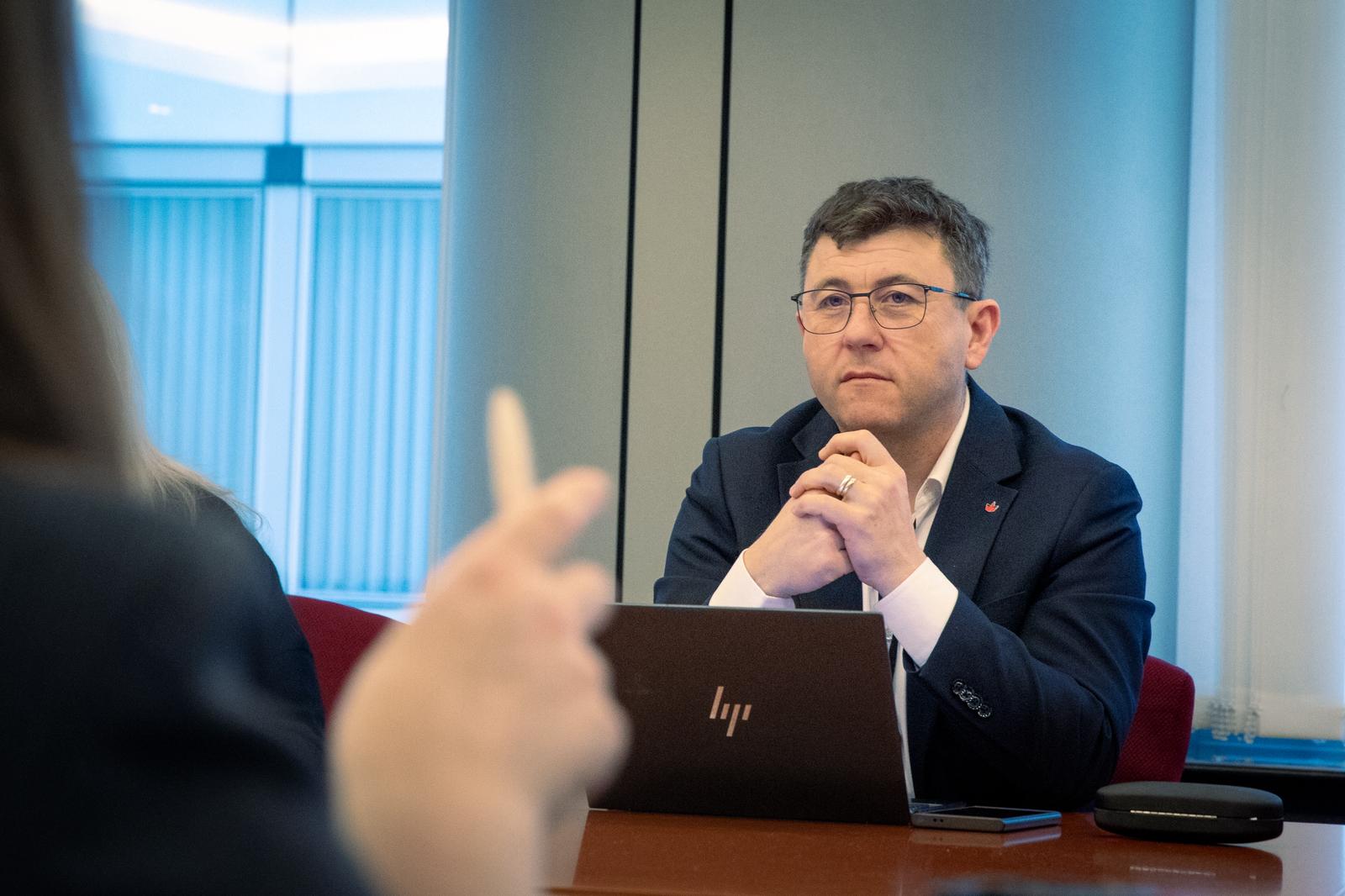
Photo: Csaba Borboly at the European Parliament, 26 February 2026