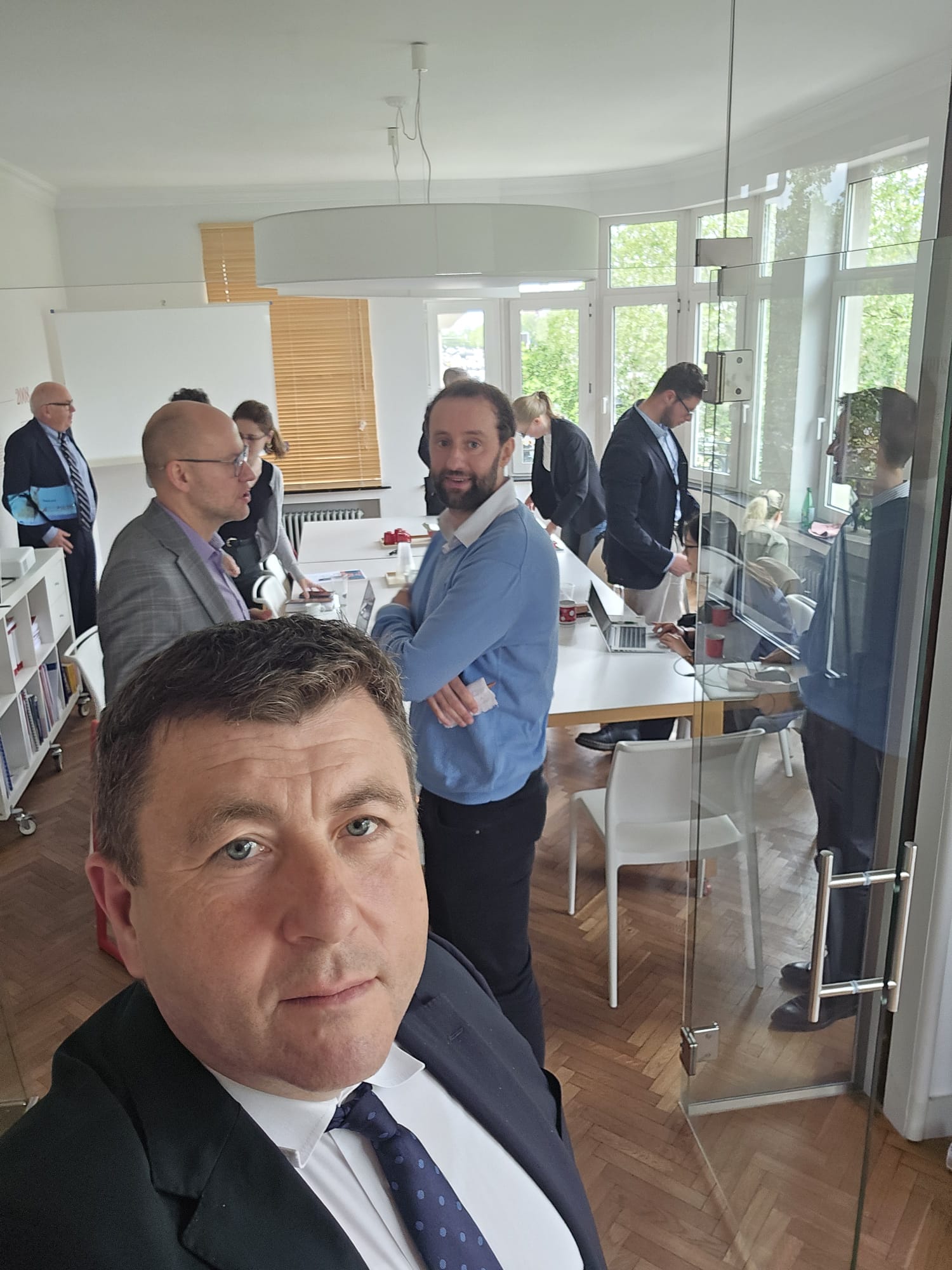
At the EU table in Brussels: Borboly Csaba represented the Committee of the Regions in the European debate on skills shortages
On 11 June 2026, a high-level policy roundtable was held in Brussels on one of the most serious challenges facing the European labour market: the shortage of skilled professionals. Alongside representatives of the World Bank, the OECD and the European Commission, Borboly Csaba was also present — as the designated representative and rapporteur of the European Committee of the Regions, and as the only elected regional politician at the table.
The European Committee of the Regions — one of the EU’s key institutions
Few people know that the European Union has an institution whose members are not bureaucrats or diplomats, but elected mayors, county council presidents and regional representatives — people who are directly accountable to their own communities. This is the European Committee of the Regions (CoR), one of the EU’s key institutions, which exercises consultation rights on an equal footing with the European Parliament and the Council in all EU decisions that affect regions and cities.
Borboly Csaba is a designated representative and rapporteur of this institution, as well as Second Vice-Chair of the SEDEC Commission — the Commission for Social Policy, Education, Employment, Research and Culture. When he travels to Brussels, he does not take part in European decision-making as a “delegate” of Harghita County, but as the designated representative and rapporteur of one of the EU’s key institutions, bringing the voice of the EU’s peripheral and mountainous regions to the table.
What was this roundtable about?
SkillsPULSE is a three-year, EU-funded research project aimed at mapping where, to what extent and what types of skills shortages exist across Europe. Eight European universities and research institutes are working together on the project. On 11 June, the project’s first major result was presented: the findings of a European survey involving several thousand employers.
The roundtable brought together representatives of some of the most prestigious international institutions:
• World Bank — senior economists from the EU Member States Human Development Programme
• OECD — experts in regional labour market policy and local employment
• European Commission, DG EMPL — Directorate-General for Employment, Social Affairs and Inclusion
• World Employment Confederation — the global confederation of the employment industry
• EfVET — the European Forum of Technical and Vocational Education and Training
• European Committee of the Regions — Borboly Csaba, designated representative and rapporteur
Why was the voice of the Committee of the Regions particularly important?
All the other participants were present as researchers, officials or industry representatives. Borboly Csaba was the only person who spoke as an elected politician and designated institutional representative, directly accountable to his citizens — and that makes a decisive difference.
The Committee of the Regions has consistently represented the position also voiced by Borboly Csaba: the EU cannot design “one-size-fits-all” solutions. A company in Vienna or Amsterdam and a small entrepreneur in Transylvania, in Szeklerland, face completely different challenges. If the EU looks only at averages, it leaves behind precisely those regions that need the most support.
The Committee of the Regions has prepared its opinion on the EU Skills Strategy — the document that will determine what resources each region will receive for vocational education and training, and for retaining skilled workers, in the next EU budgetary period. As a designated representative and rapporteur, Borboly Csaba is directly shaping this process.
What was the concrete message?
Borboly Csaba called for three concrete measures at the roundtable:
- Regional data. The European skills shortage indicator being developed by SkillsPULSE should not only provide data at national level, but also at regional level — so that peripheral areas become visible on the European map and development decisions can be based on facts.
- Territorial impact assessment. Before every major EU policy initiative, it must be mandatory to examine how the decision will affect less developed regions. Cohesion cannot be an afterthought.
- The local level must be a partner, not merely an implementer. Local governments, vocational schools, chambers and professional organisations are the institutions that know the reality on the ground. Without their involvement, neither research nor policy will reach the places where change is truly needed.
Why does this matter at home?
What is decided in Brussels regarding EU labour market and training policy has a direct impact on what resources will be available in the next EU development cycle for upgrading vocational education infrastructure, modernising VET schools and retaining young skilled professionals. As the designated representative and rapporteur of the European Committee of the Regions, Borboly Csaba is not watching these decisions from the outside — he is shaping them from within.
One sentence from the discussion
Training policies are successful when they are territorial, inclusive and forward-looking. Europe’s competitiveness depends not only on how many people we train — but on whether every region and every community has the opportunity to develop and retain its talent.
— Borboly Csaba, designated representative and rapporteur of the European Committee of the Regions