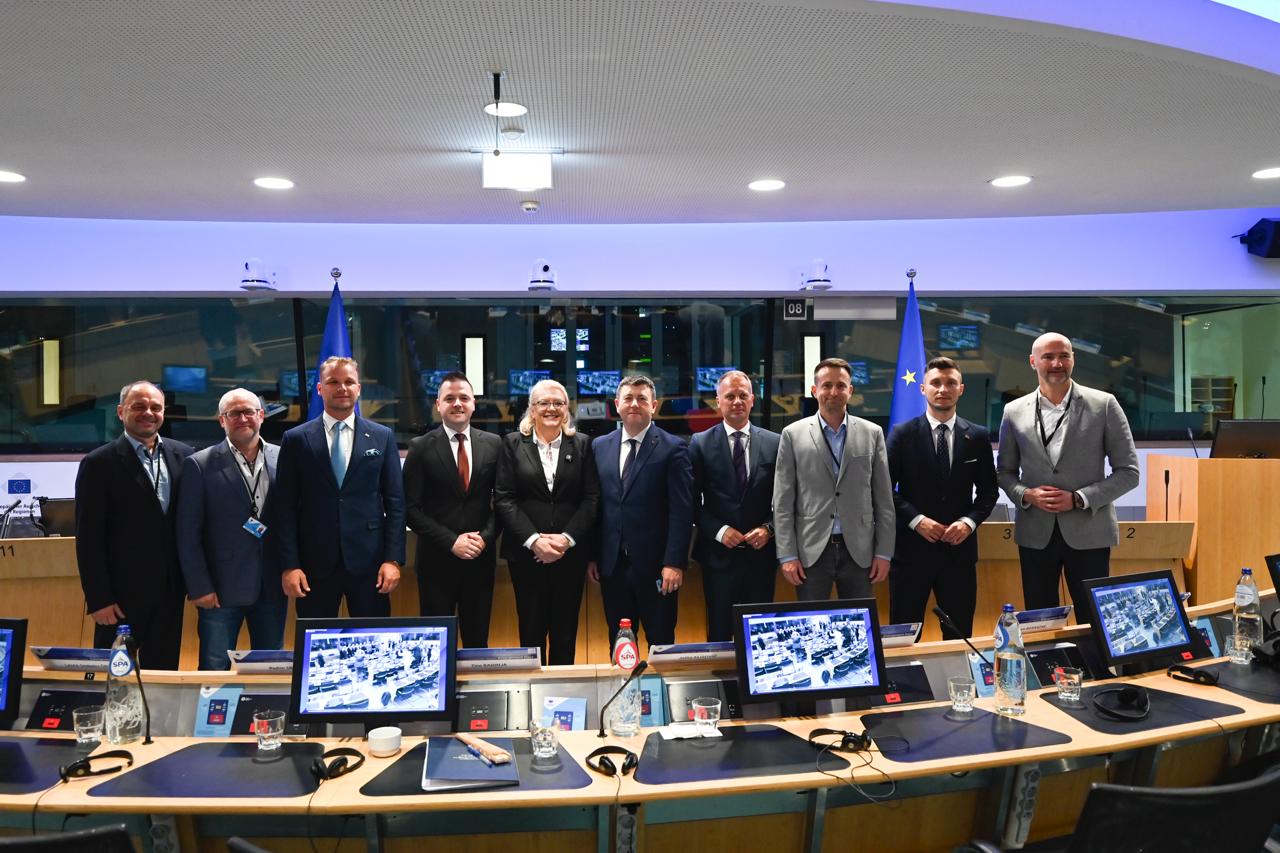
Borboly Csaba, Member of the European Committee of the Regions (CoR) and Chair of the Working Group on Bosnia and Herzegovina, today chaired the group’s 3rd meeting in Brussels, as part of the CoR Enlargement Days.
In less than a year, the Working Group has become a genuine platform for political dialogue. We have met in Brussels and on the ground in Bosnia and Herzegovina — in Brčko and now again in the European capital. Each time, we have deepened our understanding of the real situation.
Theme 1 — State of play of EU–BiH relations and local funding.
The Reform Agenda adopted under the Growth Plan is a step forward. But without concrete implementation, political declarations are not enough. The 400 million euros available under the Growth and Reform Facility are at risk if BiH fails to appoint a coordinator and ratify the necessary agreements. Borboly Csaba stressed that local authorities are responsible for implementing 70% of the EU acquis — and that funding must reach municipalities, not stop at entity level. The European Commission was asked to prepare a background note mapping concrete funding opportunities for BiH municipalities under the next MFF 2028–2034 and Global Europe instruments.
Theme 2 — FIMI: disinformation as a security threat.
Bosnia and Herzegovina faces a complex information landscape. Anti-EU narratives cross borders, languages and communities. A recent study shows that 62% of Bosnian citizens believe the EU weakened itself through sanctions against Russia, and 61% believe the EU is censoring free speech. EEAS, OSCE and field researchers confirmed: resilience against disinformation is strongest when built locally — by local authorities, journalists and civil society. Borboly Csaba directly raised the issue of publicly funded local media: where it presents only one political angle and excludes independent voices, it creates exactly the gap that external disinformation exploits.
Theme 3 — Effective local self-government.
Elected local officials from BiH — from both the Federation and Republika Srpska — confirmed: political will exists at local level, even when it is absent at national level. That is a real anchor. The Working Group will continue to support the direct involvement of local authorities in the accession process, including through the upcoming autumn session, expected to be held in Travnik.
The direction worth pursuing:
The CoR Working Group on BiH is not a ceremonial forum. It is a concrete instrument: we connect BiH local authorities with CoR expertise, EU funding instruments, and the experience of member states. The goal is that by the time of accession, BiH municipalities are real partners — not just passive beneficiaries.