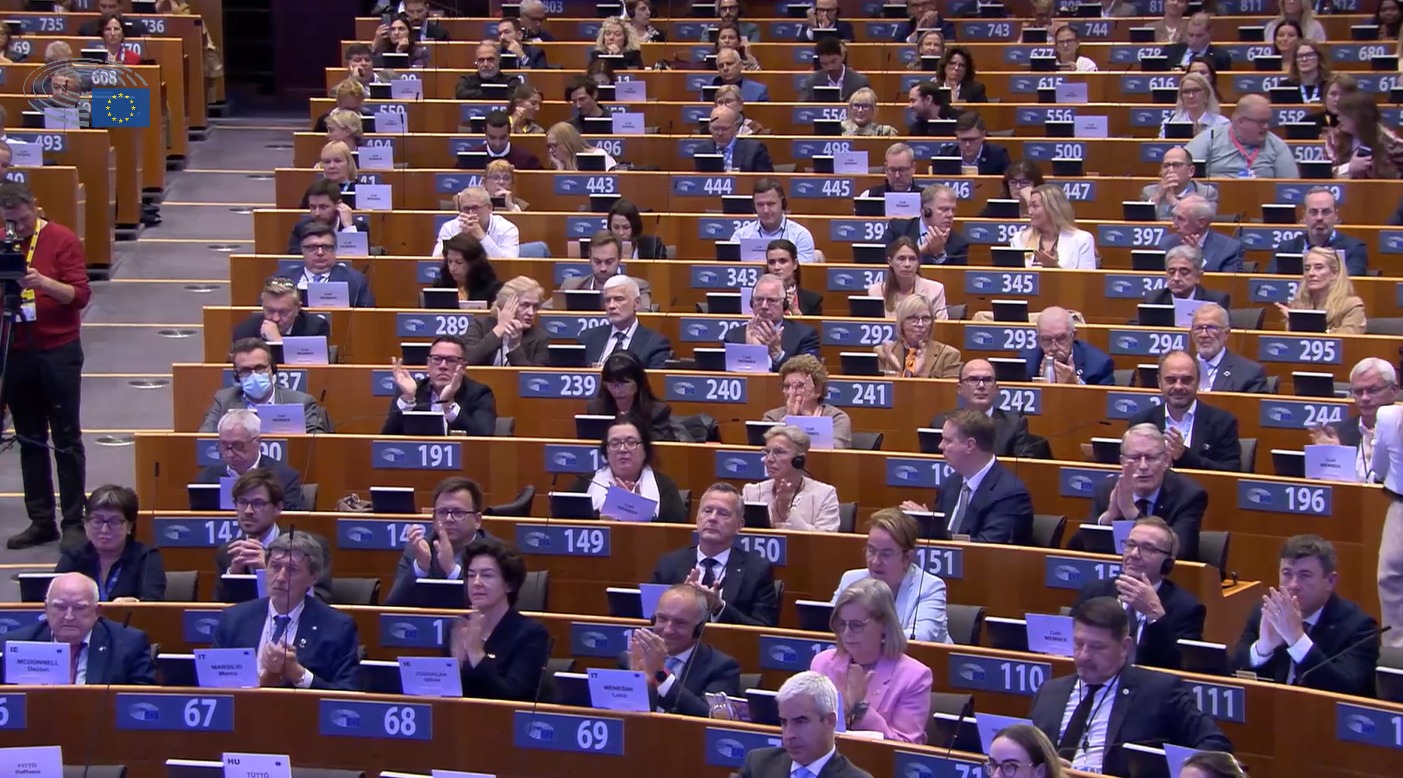
European nature policy must protect our shared natural heritage and work in the daily life of every region. This was the central message of my intervention at the joint meeting of the European Parliament Committee on Environment, Climate and Food Safety and the European Committee of the Regions Commission for the Environment, Climate Change and Energy.
The Brussels meeting focused on funding environment and climate policies in the next Multiannual Financial Framework. This is not only a budget debate. It is a debate about whether European goals can be delivered in cities, regions and rural communities across the Union.
A practical test of common rules
I used the Nature Stress Test as one clear example. The question is not only whether European rules exist. We must also examine whether they work fairly, clearly and in time in all Member States.
Large carnivore management shows the challenge. European law sets strict species protection as the main rule. It also provides legal options for action under defined conditions, including the protection of human life and public safety. In some countries, the system works smoothly. In others, the strict rule is applied at once while the legal option to act remains difficult to prove and is often challenged.
This is not a call for weaker nature protection. Strong nature policy needs clear rules, reliable data, prevention and enough support for local and regional authorities. Public trust grows when people see that the system can protect nature and respond to real risks at the same time.
A clear request for joint work
According to the information available to us, the Commission study is expected in late autumn and the final report by the end of the year. I asked the European Parliament and the Committee of the Regions to continue their joint work once the draft is available.
I proposed at least one direct exchange between the rapporteurs whose work touches, even partly, on this issue. Such a meeting could bring together the legislative and budget view of Parliament and the practical experience of regions and cities.
The aim should be concrete. The institutions should examine differences in national implementation, identify barriers for local authorities and assess what data, prevention measures, guidance and funding are needed for effective delivery.
There must not be two Europes
Europe cannot have one set of expectations for all territories while ignoring major differences in their capacity and local reality. Nor should implementation problems be turned into a divide between East and West. They are a common European challenge and require a common European response.
Regions in Central and Eastern Europe have direct experience of situations where nature policy, rural life and public safety meet. Regions in other parts of Europe bring valuable knowledge in conservation, prevention and governance. Europe becomes stronger when these experiences are shared and when common rules are improved through honest cooperation.
The next EU budget must help local and regional authorities deliver European priorities. Funding for prevention, monitoring, research, training and cooperation is not an extra cost. It is part of making European law effective and keeping public support for common environmental goals.
Bringing Europe closer
The joint ENVI and ENVE meeting showed why cooperation between Parliament and the regions matters. Parliament shapes laws and budgets. Regions and cities know how these decisions work on the ground. Connecting the two is essential for better policy and greater trust.
I will continue to support a direct discussion after the Commission documents are published. The findings of the Stress Test should not remain inside an institutional report. They should lead to practical learning, better implementation and, where needed, clear action.
The European Union is built on common values, shared responsibility and respect for every community. One Europe means that nature is protected everywhere, human life is respected everywhere and every region has a fair chance to make common rules work.