AgoraEU: €8.6 Billion – and Now It Is Decided How Much Reaches Europe’s Regions
“Those who stay silent are left behind. Those who are present where the rules are written can bring the money home.”
What Is This Article About?
This article answers a very concrete question: how can EU funding for culture, media, civil society and fundamental rights actually reach less-developed regions across Europe – funding that has too often passed them by?
Over the past year – from September 2025 to 7 May 2026 – serious work was carried out to change this. Not campaign rhetoric. But negotiations, research, amendments, bilateral consultations, thousands of kilometres travelled – and ultimately a CoR Opinion that serves as a compass for the European Commission, the European Parliament and the EU Council in shaping the AgoraEU programme for 2028–2034.
What Is AgoraEU? – The Simple Explanation
From 1 January 2028, the European Union will launch a completely new programme called AgoraEU. This is the cultural, media, fundamental rights and democratic participation pillar of the EU’s next seven-year budget – the Multiannual Financial Framework (MFF) 2028–2034.
Total budget: €8.6 billion. Over seven years. Plus two years of payments – meaning until 2036.
AgoraEU merges the two major EU programmes that came before:
• Creative Europe – culture, film, music, heritage, traditional crafts, town twinning
• CERV – citizens, equality, fundamental rights, civil society, democracy, rule of law
Anyone who has previously applied to these programmes – cultural associations, local media, civil society organisations, heritage initiatives, youth programmes, minority NGOs – will have a single common framework from 2028 onwards.
The word “Agora” is no accident: the ancient Greek agora was the public space where citizens met, debated and decided. The EU is signalling: democracy, culture and values do not live in capitals – they live in communities.
Why Do These Funds Bypass Less-Developed Regions? – The Structural Gap
Regions across Central and Eastern Europe, and more broadly across rural and peripheral Europe, systematically underperform in accessing EU cultural and civic funding. Not because their projects are less valuable. But because:
• The application system is complex. Small organisations lack the administrative capacity to manage burdensome procedures.
• Capital cities absorb a disproportionate share. Well-connected urban institutions navigate the EU system faster and more effectively.
• Rural culture and living heritage are not named in the rules. If a domain – traditional crafts, local minority media, cross-border cultural cooperation – is not explicitly mentioned in the regulation, evaluators exclude it from funding.
• Evaluators lack familiarity with peripheral regions. If a project is assessed by someone who has never visited a small rural community, how can they award points fairly?
This is not fair. But it can be changed – if we are present where the rules are written.
The Mandate: September 2025
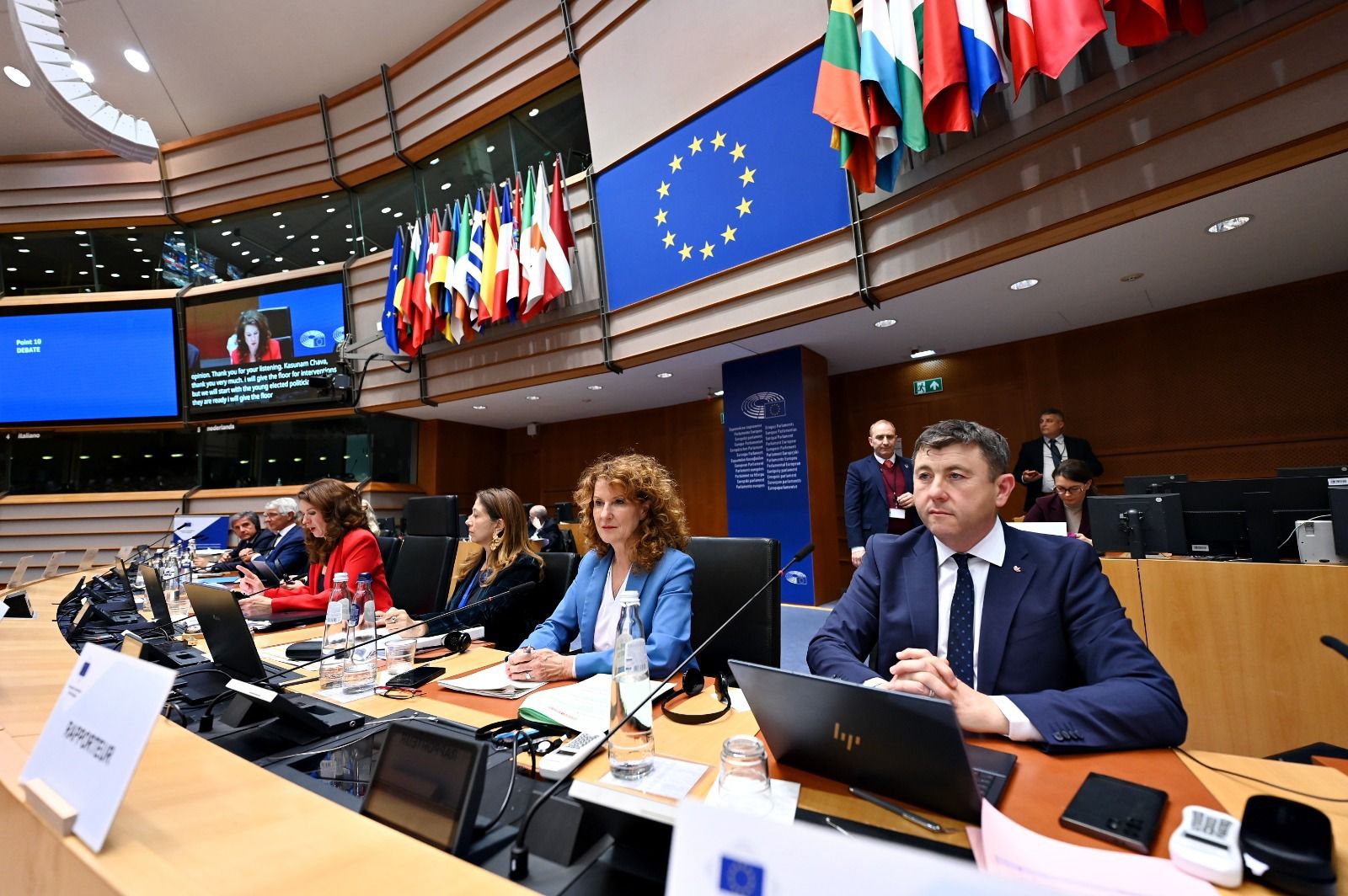
In September 2025, the European Committee of the Regions (CoR) appointed me as Rapporteur of the AgoraEU Opinion in the SEDEC Commission (Social Policy, Education, Employment, Research and Culture). Concretely, this means: I am the one who drafts the CoR Opinion that the European Commission, the European Parliament and the Council take into account when writing the regulation.
This is a rare opportunity. A representative of a less-developed region shapes the text on which a €8.6 billion European programme will be built. If done well, the interests of peripheral, rural and minority regions are embedded in European law.
My Small Team – Those Who Were There Throughout
This work is never a solo achievement. My small cabinet team – Csák László and Imets Hanna – were by my side throughout, handling the daily work in Brussels, preparing consultations, processing documents and managing communications. Without them, this year could not have been completed.
Brick by Brick – The Chronology
September 2025: Appointment and initial orientation. Processing the European Commission’s COM(2025) 550 final – a regulatory proposal of over 180 pages – began immediately.
October–November 2025: First bilateral meetings with shadow rapporteurs of the EP’s CULT committee – including Zoltán Tarr (HU, EPP), Catherine Griset (PfE), Ivaylo Valchev (ECR), Birgitte van den Berg (Renew) and Diana Riba i Giner (Greens/EFA) – and with the heritage organisation Europa Nostra. Parallel consultations in Bucharest with UDMR colleagues and Romania’s Ministry of Culture.
17 December 2025: The HÉTFA Consultation. One of the most important working sessions. The HÉTFA Research Institute – one of Hungary’s leading EU policy research institutes – conducted the detailed analysis on which the proposals were based:
• Small grants and a two-stage system for new entrants and small organisations
• Evaluators from peripheral regions included in evaluation panels
• Annual territorial performance monitoring
• Separation of news media and audiovisual support
• Sustainability of project results after final payments
• Support for generational renewal of civil society organisations
January 2026: The Rapporteur’s Working Document is finalised – the discussion paper sent to the CoR Secretariat and SEDEC members. It explicitly names: micro-grants of €5–25,000, local creative incubator houses as contact points, minority cultures as a standalone priority, territorial participation indicators.
January 2026: The AgoraEU process and CoR rapporteur methodology were also presented as part of a course at the National University of Public Service (NKE) – demonstrating the academic relevance of this Brussels-level work.
2 February 2026: At the 7th SEDEC meeting, all political groups – EPP, PES, ECR, GREEN+PRO – voted in favour of the draft opinion, with 12 rapporteur’s amendments and 36 policy recommendations.
February–March 2026: The EP’s CULT and LIBE committees work in parallel on their own AgoraEU report. Stakeholder hearings take place (CERV, audiovisual, news media, culture topics) and on 24 March a shadow rapporteurs’ meeting is held.
February–April 2026: Plenary amendments arrive from the political groups. All 15 rapporteur’s compromise amendments are carefully examined – integrating elements that strengthen the opinion, and rejecting those that would shift focus away from rural, small and minority actors.
5 May 2026: Bilateral consultation with the Council Presidency – Dr. Elena Theodoulou Charalambous, Chair of the Council’s Committee for Cultural Affairs. Confirmed: the key elements of the CoR Opinion – territorial monitoring, simplification, living heritage – can expect a positive reception not only in the EP but also in Council negotiations.
7 May 2026: The 171st CoR Plenary adopts the AgoraEU Opinion. This is today.
How Many Kilometres Did This Work Cover?
Brussels–Bucharest–Budapest–Miercurea Ciuc, back and forth, multiple times. SEDEC meetings, EP visits, bilateral negotiations, expert consultations – adding up all flights, trains and car journeys, the total comes to thousands of kilometres. Every trip represented a negotiation, an amendment, a relationship-building step.
This is not tourism. It is work. Daily presence in the system where decisions are made.
What Was Achieved? – The 8 Concrete Results
The adopted Opinion includes the following key elements – all directly serving the interests of less-developed and peripheral regions across Europe:
1. Small grants and simplified applications – two-stage system, micro-grants of €5–25,000 for small organisations and rural creative groups
2. Local contact points – information available in minority and regional languages, no need to travel to Brussels
3. Living heritage and traditional crafts – standalone funding category in the regulation, with capacity-building support
4. Local and regional media – dedicated funding for independent press in small towns and rural areas
5. Territorial monitoring indicators – annual data on how much funding reaches rural and less-developed regions
6. Generational renewal of civil society – young people can also lead projects and organisations
7. Town and county twinning – multi-annual cooperation funding
8. Minority cultural dimension – protection of ethnic, national and linguistic minorities embedded in the core text of the regulation
Where Does the CoR Opinion Matter? – The Logic of EU Decision-Making
The EU legislative process, simplified:
Commission proposes → Parliament + Council negotiate → Trilogue = agreement → Regulation enters into force
The CoR Opinion sends a signal to both the EP and the Council. When the CoR and the EP pull in the same direction – as now, where Zoltán Tarr as EPP shadow rapporteur in the EP and the CoR Rapporteur both champion the same territorial balance principles – the argument becomes powerful in the trilogue.
Event Date
CoR Plenary – Opinion adopted 6 May 2026
EP CULT/LIBE committee – draft report presentation 3–4 June 2026
Deadline for EP amendments 11 June 2026
EP committee vote 19 October 2026
EP plenary vote October–November 2026
Start of trilogue negotiations November–December 2026
First reading agreement End of March 2027
AgoraEU enters into force 1 January 2028
First calls for applications 2028
Programme closes 2036
The window is narrowing. Those who do not lay the groundwork now will again find in 2028 that the funding has passed them by.
The Political Message – Hundreds of Millions Can Be Brought to Regions
€8.6 billion. From this, the share available to Romania’s regions – if we use the opportunity – can be hundreds of millions of euros in the 2028–2036 period, for culture, media, civil society, fundamental rights, youth programmes, twinning and heritage protection.
But this will not come automatically. Romania must do its homework:
• With real, locally grounded plans – not copy-pasted ministerial templates
• With a place-based approach – projects tailored to the actual needs of the territory
• With genuine involvement of the local and regional level – because central government alone cannot find all the answers
We see too many Romanian programmes fail – not for lack of money, but because planning was not grounded in reality, capacity was missing, cooperation was not built in time. The AgoraEU Opinion is precisely the antidote to this.
Those who stay silent receive little. Those who are present receive much. That is democracy.
Csaba Borboly | Member of the European Committee of the Regions | Vice-President of Harghita County Council
Rapporteur, CoR Opinion on AgoraEU (SEDEC-VIII/009) | COR-2025-03541