The voice of Harghita County before European decision-makers in the field of social economy
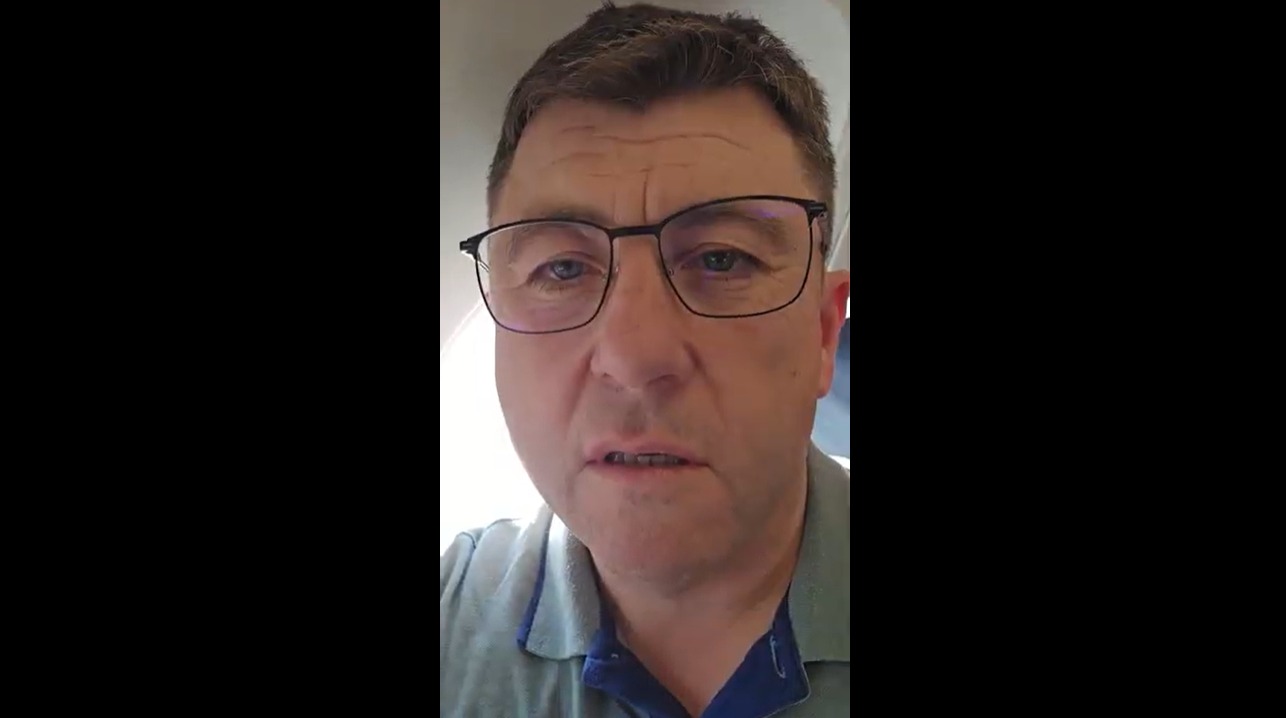
Borboly Csaba, Vice-President of the Harghita County Council, spoke on 23 April 2026 on behalf of the European Committee of the Regions at a conference on social economy organised under the Cypriot Presidency of the Council of the European Union. The event was attended by high-level representatives of European institutions and focused on how social economy can be brought closer to local communities.
The conference, held under the auspices of the Cypriot Presidency of the Council of the European Union, marked the closing event of the webinar series entitled “Democracy at Work – Social Economy actors bringing EU values to citizens”. The discussions focused on the mid-term review of the Social Economy Action Plan, one of the key documents shaping the European Union’s social economy policy for the coming years.
In his intervention, Borboly Csaba drew attention to the fact that social economy is particularly important for rural and peripheral regions. In these areas, cooperatives, associations, social enterprises and local community initiatives often provide services that directly affect people’s everyday lives.
“Social economy is particularly important for rural and peripheral regions – where the market sector is less active and where cooperatives, associations and social enterprises provide essential services: food production, education, care services and local supply chains,” said Borboly Csaba.
For Harghita County, this is not a theoretical issue. Local producers, short supply chains, community-based services and cooperative thinking are values that have long been present in our region. The Szekler Product brand also reflects this approach: locally created value truly serves the community when trust and cooperation are built between producers, entrepreneurs and consumers.
The conference was attended by representatives of the European Commission, the European Parliament, the European Committee of the Regions and other European institutions. The importance of the event was also underlined by the presence of Francesco Corti, representing the cabinet of Roxana Mînzatu, European Commission Executive Vice-President responsible for social rights and jobs, as well as Ruth Paserman, Director-General of DG EMPL.
Borboly Csaba emphasized that the European Union’s decisions on social economy must take into account the specific characteristics of the local and regional levels. Public procurement rules, state aid, the use of European funds and the future multiannual financial framework are all areas that have a direct impact on local communities.
“The message of the European Committee of the Regions is clear: the European Union’s framework for social economy – the Action Plan, the Public Procurement Directive and the future Multiannual Financial Framework – must take the regional and local levels into account. A purely top-down approach is not sufficient,” stressed Borboly Csaba.
Three important directions for the coming period were highlighted in the intervention. First, the genuine partnership role of regional authorities in the use of European funds, including ESF+ and cohesion funds, must be strengthened. Second, progress is needed on legal frameworks that support cross-border cooperation. Third, regular regional-level data collection is necessary so that the realities of rural areas become more visible in European decision-making.
According to the mid-term review of the Social Economy Action Plan, some of the measures adopted in 2021 have already been implemented, while others are currently under way. However, access to financing, better use of regional and local opportunities, and the provision of adequate data and legal frameworks remain significant challenges.
According to Borboly Csaba, such European-level participation is important for Harghita County because it allows the views of rural regions, local communities and cross-border areas to reach directly those who make decisions on European rules and funding.
The aim is for Harghita County and Szeklerland not only to adapt to European decisions, but also to help shape them through their own experience and proposals. The strength of local communities, the work of producers, the role of social enterprises and community solidarity are values that deserve greater emphasis in European policies as well.