
We raised it in Brussels: the digital future must reach small towns too
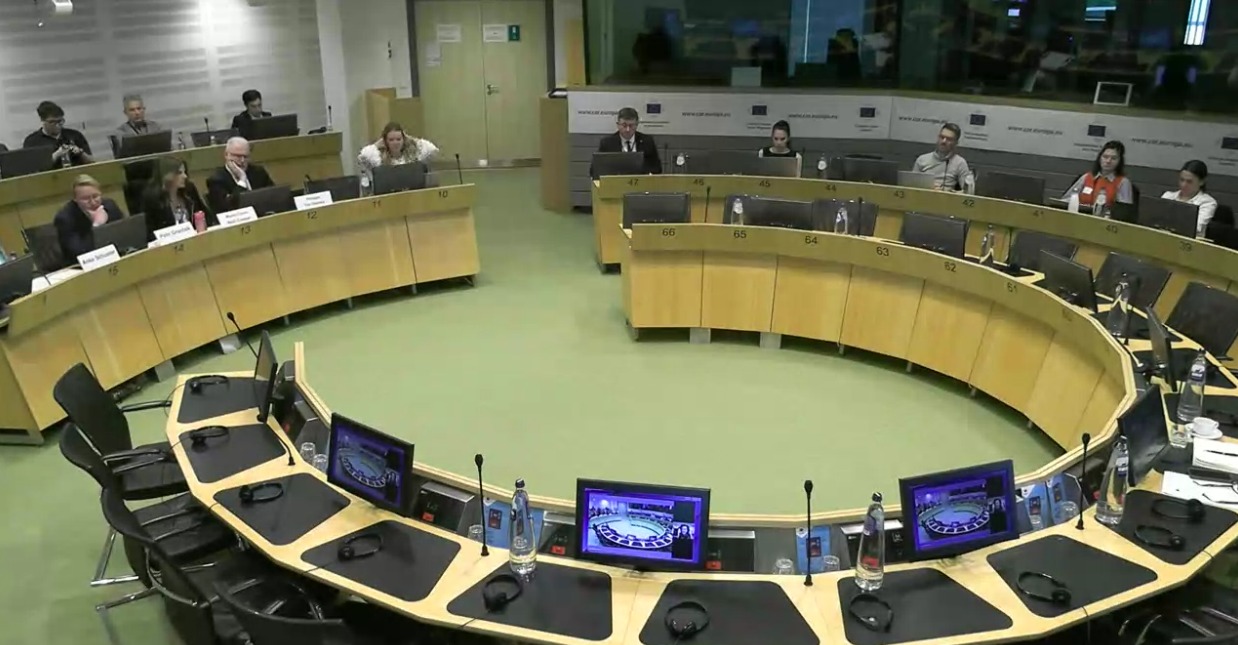
On 14 April 2026, Csaba Borboly, Vice-President of Harghita County Council, participated in the second Digital Participatory Forum of the European Committee of the Regions (CoR) in Brussels, where the challenges of European digital sovereignty were discussed.
The forum’s central challenge: an estimated 85–90% of the EU’s digital infrastructure is controlled by foreign — primarily American — companies. This means that European administrations, schools, hospitals and local authorities largely operate on systems over which Europe has no real control. Our data is stored abroad, and the terms are set by others.
Romania’s reality: many systems, little connectivity
Romania has one of the best internet infrastructures in the EU — yet scores only 3.1 out of 10 on digital public administration maturity. The main reason is not a lack of networks, but the fact that every institution, every authority builds its own isolated system that does not communicate with others. Citizens must submit the same data again and again, carry paper documents, and appear in person for things that should be handled digitally.
Csaba Borboly raised this concrete, everyday problem at the forum and directed a direct question to the speakers: how will the EU ensure that digital sovereignty does not stop at the gates of major cities?
Four major topics — four direct impacts for Harghita County
- Artificial intelligence in public administration (AI Continent Action Plan)
The EU aims to bring AI tools into the public sector — faster procedures, less bureaucracy. The CoR opinion stresses that these tools must reach smaller local authorities and rural regions, not just large cities.
- Cybersecurity and digital networks (Digital Networks Act)
New EU rules will protect digital infrastructure: 5G networks, submarine cables, data traffic. Romania has already banned high-risk 5G equipment by law — the new EU framework can standardise this approach.
- Digital simplification and data union (Data Union Strategy)
The goal: citizens submit their data once, and systems share it automatically. This is precisely the problem Romania — and Harghita County — faces every day.
- European Business Wallets
The EU proposal: every business receives a digital identifier to manage administrative formalities more easily, including cross-border. Estimated savings for SMEs across the EU: 134 billion euros.
What Harghita County is already building
The county’s 39 libraries are being transformed into digital skills centres, funded by the EU Recovery and Resilience Facility (PNRR). These locations will become places where anyone — young and old alike — can learn to navigate the digital world and benefit from EU opportunities.
But all of this only works effectively if EU digital decisions truly reach the regions — and if the systems are connected.
Harghita County Council | 14 April 2026