From Morning to Evening in Brussels: Budget, Culture, Mountains, Negotiations – Because the Next Twenty Years Are Being Decided Now
Csaba Borboly | Brussels, March 4, 2026
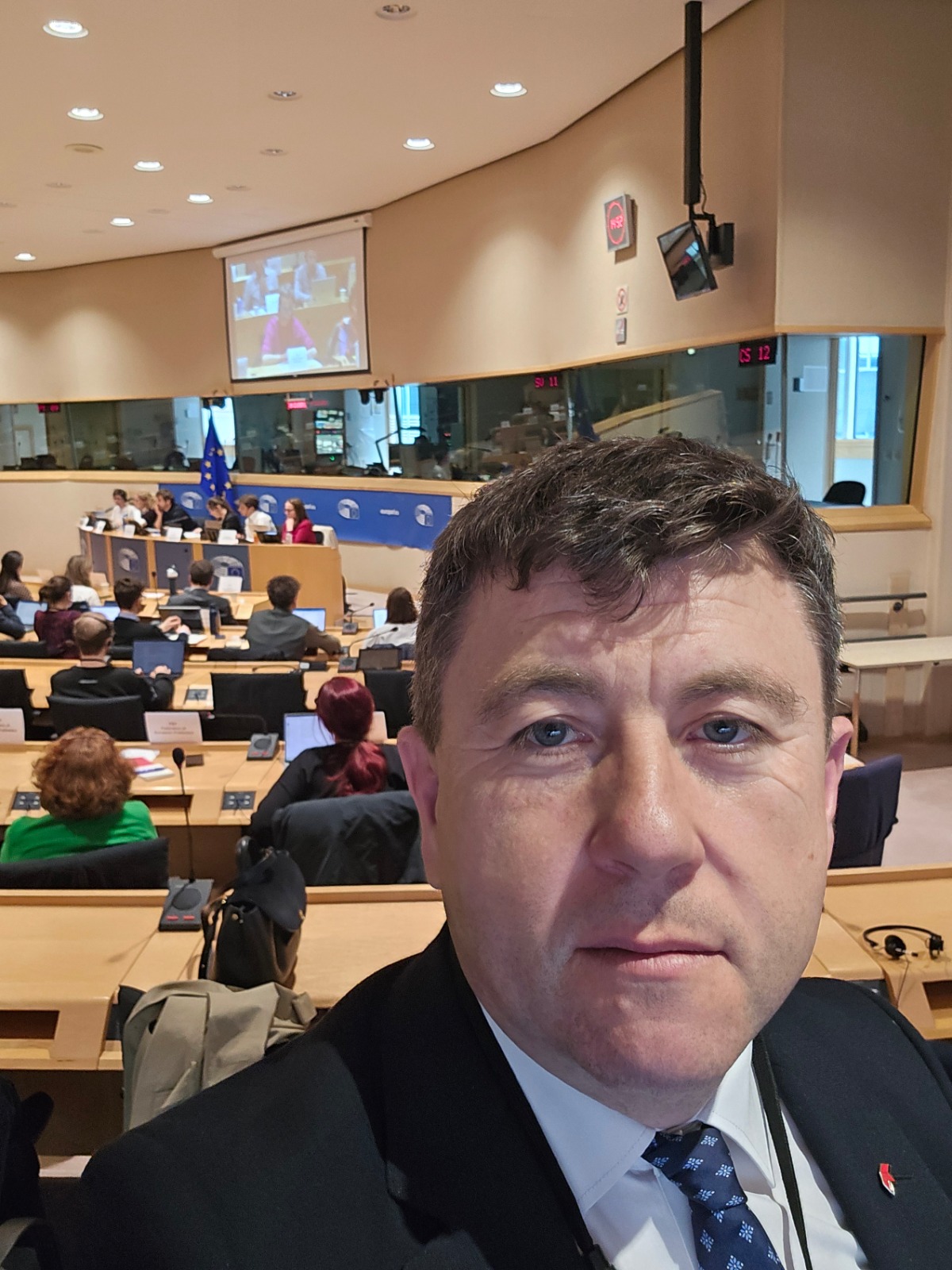
It has been a busy day in Brussels – and it is not over yet. From morning until the afternoon I spoke at four different events: the plenary session of the European Committee of the Regions, a consultation with the European Parliament’s Committee on Culture, the European People’s Party negotiations on the Multiannual Financial Framework (MFF), and the meeting of the Mountain Alliance.
Only one of these was a plenary session – the other three were negotiations, professional consultations and bilateral meetings. But this is exactly what shows that the real work is happening now. Right now, in 2026. And later today I will also address other topics, which I will report on soon.
Yesterday I was in Florence, where we discussed the very same issues: new rules of the game, a new world and a new methodology. The old recipes no longer work. We need place-based development – built from the bottom up: from the municipality to the micro-region, from the county to the national level. This is not just a slogan; it is the only way for the voices of our communities to be integrated into European decision-making.
A Train That Is Leaving Now
In 2026 it will be decided what the European Union will look like between 2028 and 2034. The Multiannual Financial Framework (MFF), new programmes and the rules for EU funding are all taking shape now. Those who get on this train now will help shape the future. Those who miss it will later have to make do with the leftovers.
This does not require miracles – only work, preparation and timely proposals. We must be present both in Bucharest and in Brussels with professional arguments, concrete texts and ready-to-submit amendments. The Democratic Alliance of Hungarians in Romania (RMDSZ) has a chance to present a vision for the future – but only if everyone does their part. The “Pató Pál” attitude of “we’ll deal with it tomorrow” could close the door for twenty years.
On the EU Budget – At the Plenary Session in the Presence of Commissioner Serafin
At the 170th plenary session of the European Committee of the Regions we voted on the post-2027 MFF in the presence of Budget Commissioner Piotr Serafin.
The Finnish rapporteur Sari Rautio did excellent work. However, a purely performance-based approach is not enough – we cannot allow resources to be concentrated in regions that are already stronger. I therefore proposed three amendments:
- Geographical balance:performance assessment must also reflect territorial cohesion, not only numerical indicators.
- Involvement of local governments:flexibility can only work if local and regional authorities are meaningfully involved in decision-making.
- Culture is not a cost but an investment:within the AgoraEU programme, funding for culture must match the level of ambition set by the Union.
I told the Commissioner directly:
“A budget without culture is a budget without a soul.”
A budget without a soul cannot build communities.
The AgoraEU Cultural Programme – Professional Consultation with Members of the European Parliament
From the plenary session I went directly to a consultation with the European Parliament’s CULT Committee, where we discussed the cultural dimension of the AgoraEU programme.
I arrived with good news: the MFF rapporteur Sari Rautio accepted my proposal – culture is now positioned at the heart of the EU budgetary package. At the same time, I raised several important issues in the details:
- Cultural heritage as a separate priority– not merely a subsection of innovation, but a field deserving support in its own right.
- Recognition of minority cultures– experience from Harghita County shows that Hungarian minority culture is maintained with fewer resources and less visibility. Our opinion therefore explicitly recognises ethnic, national and linguistic minorities.
- Protection of cultural workers in the age of AI– artificial intelligence should support culture, not replace creators. The expertise of a restorer, a director or a festival organiser cannot be replaced by algorithms.
- Real accessibility– simplified applications, a maximum 10% co-financing requirement for smaller actors, and territorial indicators across programmes.
At the EPP Negotiations – Consultation with MEP Siegfried Mureșan
During the European People’s Party meeting I presented three negotiating arguments directly to MEP Siegfried Mureșan:
- National plans must not crowd out regions. If regional chapters depend entirely on national governments’ discretion, peripheral regions risk being sidelined.
- The lesson of AgoraEU: the opinion I proposed and which was unanimously adopted in February demonstrated that cultural and media programmes often fail to reach rural communities. This must be corrected within the structure of the MFF.
- Biodiversity: regions that protect nature deserve compensation, not penalties.
I assured Mr. Mureșan that local and regional authorities stand ready to provide data and expertise to strengthen the European Parliament’s negotiating position.
At the Mountain Alliance Meeting – With Vice-President Roxana Mînzatu
At the Mountain Alliance meeting, alongside Herbert Dorfmann and Rosaura Maupertuis, Roxana Mînzatu, Vice-President of the European Commission, also participated. Being originally from Brassó, she knows the realities of the Carpathians well.
- Mountain farmers:they keep our landscapes alive. Within the Common Agricultural Policy we need mandatory ANC payments and at least 15% dedicated financing.
- Preserving traditional skills:if shepherds, small farmers or forest managers disappear, biodiversity will suffer as well. The EU budget must invest in training and generational renewal.
- Coexistence with large carnivores:Romania’s bear population exceeds 12,000. The LIFE programme does not cover the daily costs of coexistence, therefore a multi-fund approach is needed.
Mountain regions provide water, carbon sequestration and food security for the whole of Europe. If we expect this from them, we must also provide the necessary financial support.
Bottom-Up Development – Because That Is the Only Way It Works
Yesterday in Florence, today in Brussels – and everywhere the same lesson emerges: European policies cannot succeed if they are not built from the bottom up. Municipality, micro-region, region, county, country – this is the natural order. Place-based development is not an optional extra but a fundamental requirement.
The new world requires a new methodology. The old ostrich-like politics – pretending that everything is fine and nothing needs to be done – cannot guide planning for the next twenty years. The decisions taken in 2026 will reach far beyond this budgetary cycle. What is being built now will shape the next two decades.
The Day Is Not Over Yet
This summary covers the programme from morning until the afternoon – but the day is not over yet. I will report soon on other topics as well. One thing is certain: today there was no stopping, and there will be none.
Because those who prepare today will shape the future tomorrow. Those who wait today will fall behind tomorrow. Europe is strong only if all its regions are strong – and we work for that every day.
Brussels, March 4, 2026
Csaba Borboly
Vice-President of the Harghita County Council
Member of the European Committee of the Regions