Children across Europe encounter the same platforms, recommendation systems and emerging AI services. Access to support, trusted information and meaningful participation should not depend on where they live or which language they speak. This was the perspective I brought to the SEDEC study visit of the European Committee of the Regions in Mainz on 24 November.
The exchanges with Jugendschutz.net examined online sexual abuse, extremism, harmful content relating to body image and the design of digital services and AI toys. Stefan Glaser presented the work of the German expert commission. The visit to funk, the online content network of ARD and ZDF for young audiences, added a complementary perspective: how public service content can reach young people where they already are.
The central question: what comes first, and how do we know it works?
I asked Mr Glaser which recommendation he would prioritise for immediate implementation and how he would measure whether it genuinely improved children’s safety.
His response prioritised regulation focused on risks and service design, including safety by design and safety by default. Removing individual pieces of harmful content remains necessary, but the scale of the digital environment makes structural prevention essential.
The response did not set out a specific measurement framework. This is an important subject for further work. Removing content, reducing exposure to harm, improving design and connecting a child with support are related but distinct outcomes. The number of activities delivered is not, by itself, proof of impact.
Parents and teachers need support, but they cannot substitute for the responsibility of service providers. Local authorities can help connect schools, families, youth organisations and support services. Their role should be realistic and properly resourced, without confusing local prevention with statutory platform supervision.
Why territorial experience matters
My amendment proposals concerning digital child protection seek to ensure that different local conditions inform European policy. The proposal associated with point 16 highlights disadvantages that may accumulate in rural, remote, mountainous and depopulating communities. The proposal associated with point 48 reinforces the role of trusted local institutions in delivering media literacy. The proposal associated with point 56 supports participation beyond the best connected urban centres.
The draft already recognised minority languages. The practical challenge is to make guidance and support understandable and usable. I do not present these proposals as confirmed funding awards or proof of adoption. Their value lies in bringing concrete territorial concerns into the preparation of decisions.
Building support through professional and political dialogue is part of this work. Local experience can strengthen a common European response when it is translated into clear arguments and transferable solutions. This is not about securing exemptions from European ambition. It is about making that ambition work across different communities.
Protection must be combined with empowerment and participation
The German presentation underlined that restrictions alone cannot provide the whole answer. Age assurance needs to be assessed alongside privacy. Families need practical guidance. Young people need knowledge, judgement and opportunities to participate.
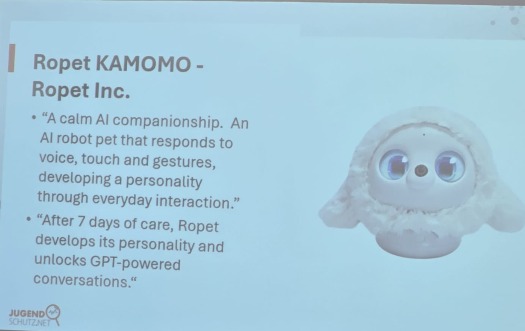
The discussion of AI companions and connected toys showed why precise functions, evidence and accountability matter. Marketing a product to children does not, by itself, establish that it is safe. Emotional interaction, recommendations, data processing and commercial incentives need careful assessment.
The funk exchange offered the other side of the same challenge. Public service communication must understand young audiences and provide credible, relevant content. We should not leave the online environment entirely to commercial incentives and then expect families alone to deal with every consequence.
From European dialogue to practical local capacity
Communities should first map existing support, identify gaps and establish clear referral pathways. Schools and youth organisations need usable guidance, not simply additional responsibilities. The ability to obtain support in a language a child understands must be treated as a practical requirement, not a symbolic gesture.
Cooperation between local authorities, schools, universities, specialist organisations and young people can turn these objectives into realistic programmes. Such work needs clear responsibilities and evidence about outcomes. It should build on effective services rather than repeatedly starting from zero.
Preparing for the next European investment framework
The Commission’s proposed EU budget for 2028 to 2034 includes national and regional partnership plans. The final framework remains under negotiation. It should strengthen meaningful partnership with local and regional authorities rather than reduce their involvement to consultation after priorities have been settled.
Participation in a study visit does not guarantee funding. Future applications must meet the relevant programme rules. Nevertheless, prepared partnerships and well evidenced needs are essential if communities are to make effective use of opportunities when they arise.
The next generation deserves more than a choice between unprotected participation and exclusion. It deserves safer services, informed adults and space to learn and create. Eastern and western European regions can advance this together by sharing knowledge and recognising different starting points.
This is why I engage in European work: to bring local realities into common decisions and to bring practical knowledge back to our communities. What we leave young people is also trust, respect and the experience that European cooperation can improve everyday life.
Comments are closed.