What happened?
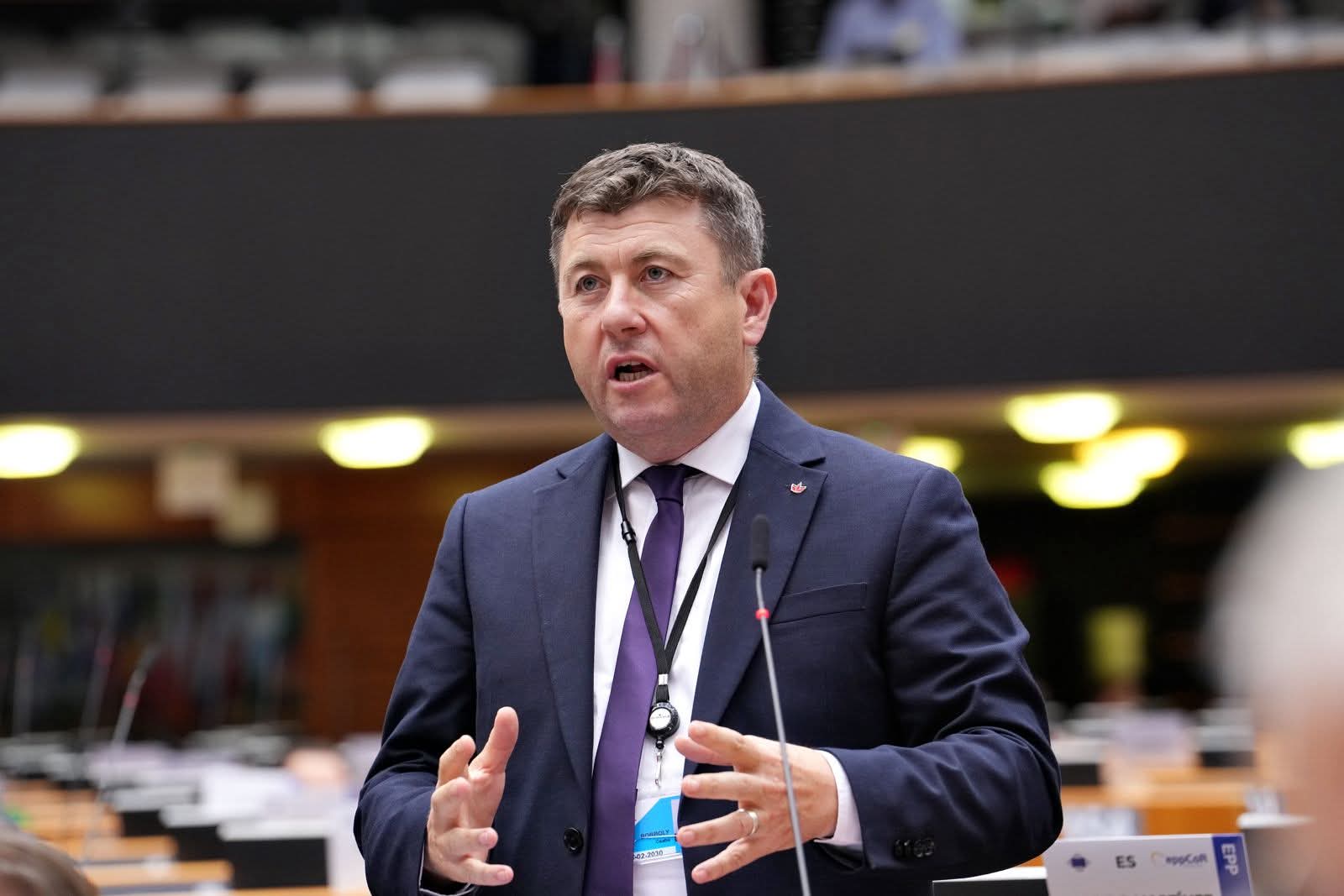
On 2 July 2026, the European Committee of the Regions voted at its plenary session on its opinion concerning the EU’s asylum, migration and integration support framework for the period 2028–2034. Csaba Borboly, Vice-President of the Harghita County Council and member of the European Committee of the Regions, tabled and defended amendments at the committee stage.
What was achieved?
One amendment states that EU funds must specifically reach smaller local authorities with limited administrative capacity — particularly in rural, mountainous, minority and border regions. This means that regions like Harghita County will not be excluded from the distribution simply because they lack sufficient human resources to submit applications.
The other amendment concerns local protection against disinformation and fake news. In rural and minority regions, much of the fear and tension surrounding migration is fuelled not by reality, but by manipulated content. The EU fund will now be able to finance this as well: media literacy, community dialogue and local fact-checking.
What is new in EU policy?
Until now, EU migration policy has focused primarily on external borders, reception and return. This opinion represents an important step towards ensuring that the support system is accessible not only to large institutional actors, but also to smaller, rural, mountainous, border and minority communities. This marks a shift in approach, as it acknowledges that local authorities also have a role to play in addressing migration-related challenges.
What comes next?
The opinion of the European Committee of the Regions is advisory in nature, but represents a formally requested position addressed to the European Parliament and the Council of the European Union, which will decide on the final text of the regulation. Negotiations are set to begin in autumn 2026. The more prominently the concerns of smaller local authorities and rural and minority regions feature in the CoR text, the greater the chance that they will also be reflected in the final regulation. In the longer term, this means that regions like Harghita County could benefit from the EU migration fund starting in 2028 — for local capacity-building, community dialogue, media literacy and the prevention of social tensions.
Why does this matter for Harghita County?
Because this is one of the first occasions on which an EU migration document so clearly reflects the perspective of smaller, rural, mountainous and minority regions. From this point forward, we have a stronger basis on which to argue at EU level that regions like Harghita County cannot be left out of decisions and resources simply because they consist of smaller local authorities, have more limited administrative capacity, or represent a distinctive community context.