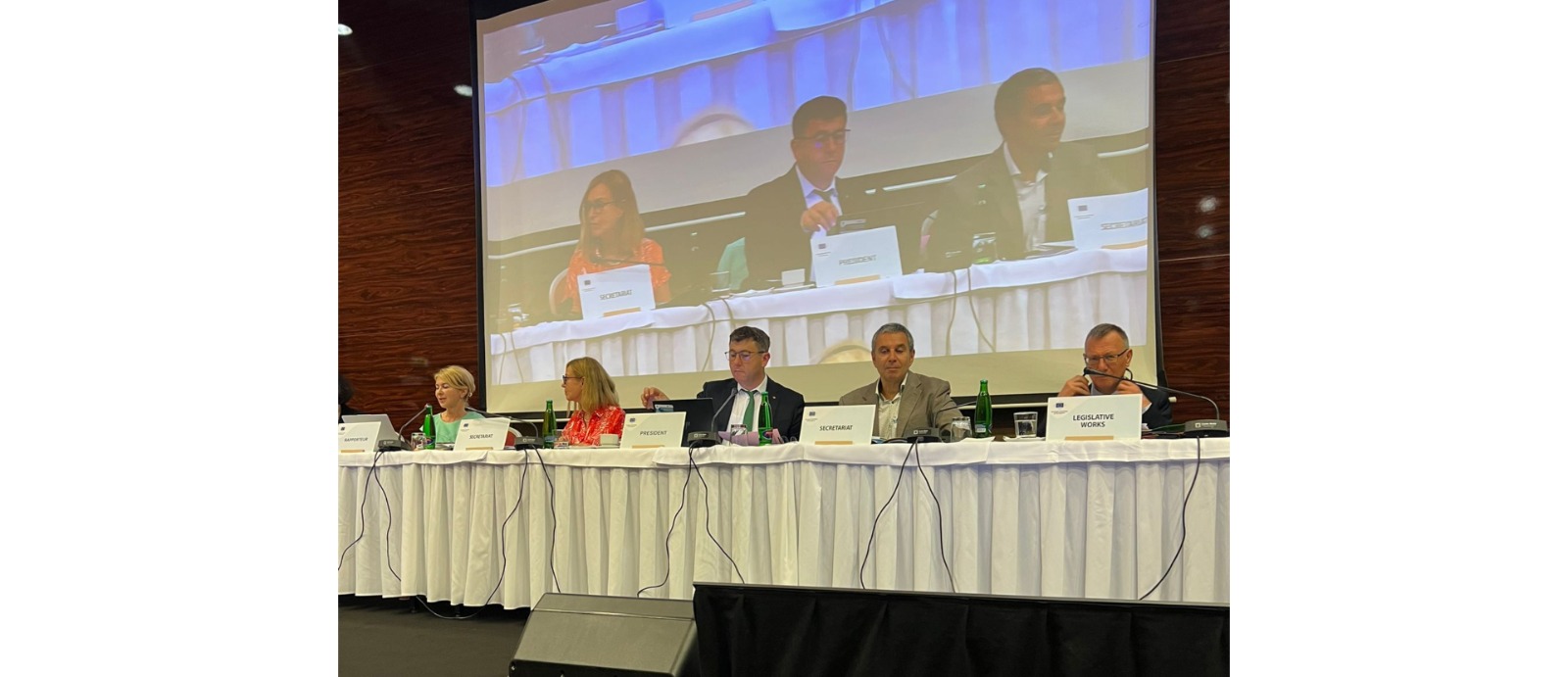
At the meeting of the SEDEC Commission of the European Committee of the Regions, the commission voted in favor of the amendments that, for the first time, include the cultural rights of national, ethnic and linguistic minorities, as well as the related EU funding, in the EU Culture Compass.
Out of five amendments, three were adopted. These three amendments, however, fundamentally change the direction of the European Union’s cultural policy – and since the failure of the Minority SafePack in 2020, this is the first time that minority cultural rights have been included in an adopted EU policy text.
Adopted amendments: 3
Amendment 2R – Point 6: Minorities are included in the management of EU cultural funding
Organizations representing minority communities must be involved in the development, monitoring and evaluation of EU cultural funding – not only majority local authorities. For Harghita and similar regions, this means a structural right of access.
Amendment 8R – New point after Point 12: The EU recognizes the place of minority cultures in Europe
For the first time, it appears in a separate point that Europe’s cultural diversity includes the culture, language and heritage of national, ethnic and linguistic minorities – with dedicated support, especially in areas where these communities make a significant contribution to cultural diversity and cohesion.
Amendment 16R – New point after Point 19: The living heritage of mountain regions = skills, jobs, future
EU vocational training programs will be required to include living heritage-based knowledge and traditional craft cultures from rural, mountain and border regions – from the perspective of youth retention, quality employment and local economic resilience. This amendment is directly relevant to Harghita.
What does this mean for Harghita County and for the other counties of the Carpathian Basin?
Harghita County is a region with a special situation: mountainous, peripheral, yet extremely rich culturally, where local traditions, linguistic diversity and living heritage – from crafts and local festivals to mountain farming – are part of everyday reality and represent an economic resource. The adopted amendments open access to EU cultural and vocational training funds precisely for such areas.
Until now, EU cultural funding has largely favored major cities. Minority organizations and mountain communities have often been left out of funding opportunities – not because they lacked value, but because of the conditions imposed. These three adopted amendments begin to correct this structural injustice.
The next step: the CoR plenary vote on 13–14 October 2026 – where the two amendments that were not adopted can be resubmitted, while the adopted text can strengthen them as a precedent.