Csaba Borboly in Brussels: Fighting for the Survival of Mountain Municipalities in the EU Budget
What is this about in simple terms?
On March 4, Csaba Borboly, Vice-President of Harghita County, spoke in Brussels at the European Parliament during a debate on the European Union’s next seven-year budget (2028–2034) — specifically on how mountain areas can receive more attention and stronger financial support.
The breakfast debate was organized by the Alliance for European Mountains, a group bringing together Members of the European Parliament and members of the European Committee of the Regions to ensure that Europe’s mountain territories are not sidelined in major EU decisions.
What did Csaba Borboly highlight in his speech?
Borboly focused on three key points:
1. If traditional farming disappears, nature becomes poorer too.
Shepherds, small farmers and forest managers are the ones who keep mountain landscapes alive. If they give up due to lack of support, pastures become overgrown, species-rich grasslands disappear, and Europe loses part of its natural heritage.
For this reason, Borboly supported the Alliance’s proposal that at least 15% of the EU’s Common Agricultural Policy (CAP) should be earmarked for Areas with Natural Constraints, and that investment should also go into training and generational renewal for mountain farmers.
2. The LIFE programme is not enough to finance coexistence with large carnivores.
In Romania, EU nature legislation (the Habitats Directive) has been effective: the bear population has grown to more than 8,000 individuals — the largest in Europe. This is positive from a conservation perspective.
However, the daily costs — electric fencing, guard dogs, crop damage, stress — are borne by farmers. The EU’s LIFE programme is suitable for pilot projects, but it does not provide stable, structural funding.
Borboly proposed, as he previously did in the Committee of the Regions, a multifund approach — combining agricultural funds, cohesion funds and, where necessary, targeted instruments — so that prevention and compensation are permanent and not dependent on short-term project cycles.
3. Mountain skills deserve a place in the “Union of Skills” programme.
Roxana Mînzatu, Executive Vice-President of the European Commission responsible for social rights, skills and preparedness, oversees EU funding for training and workforce development.
Borboly met with her to advocate for the inclusion of mountain-specific skills — such as shepherding, livestock breeding and mountain forestry — in the EU’s skills strategy. These are not merely traditions, but essential tools for maintaining biodiversity.
If these skills disappear, nature will suffer as well.
What happened after the speech?
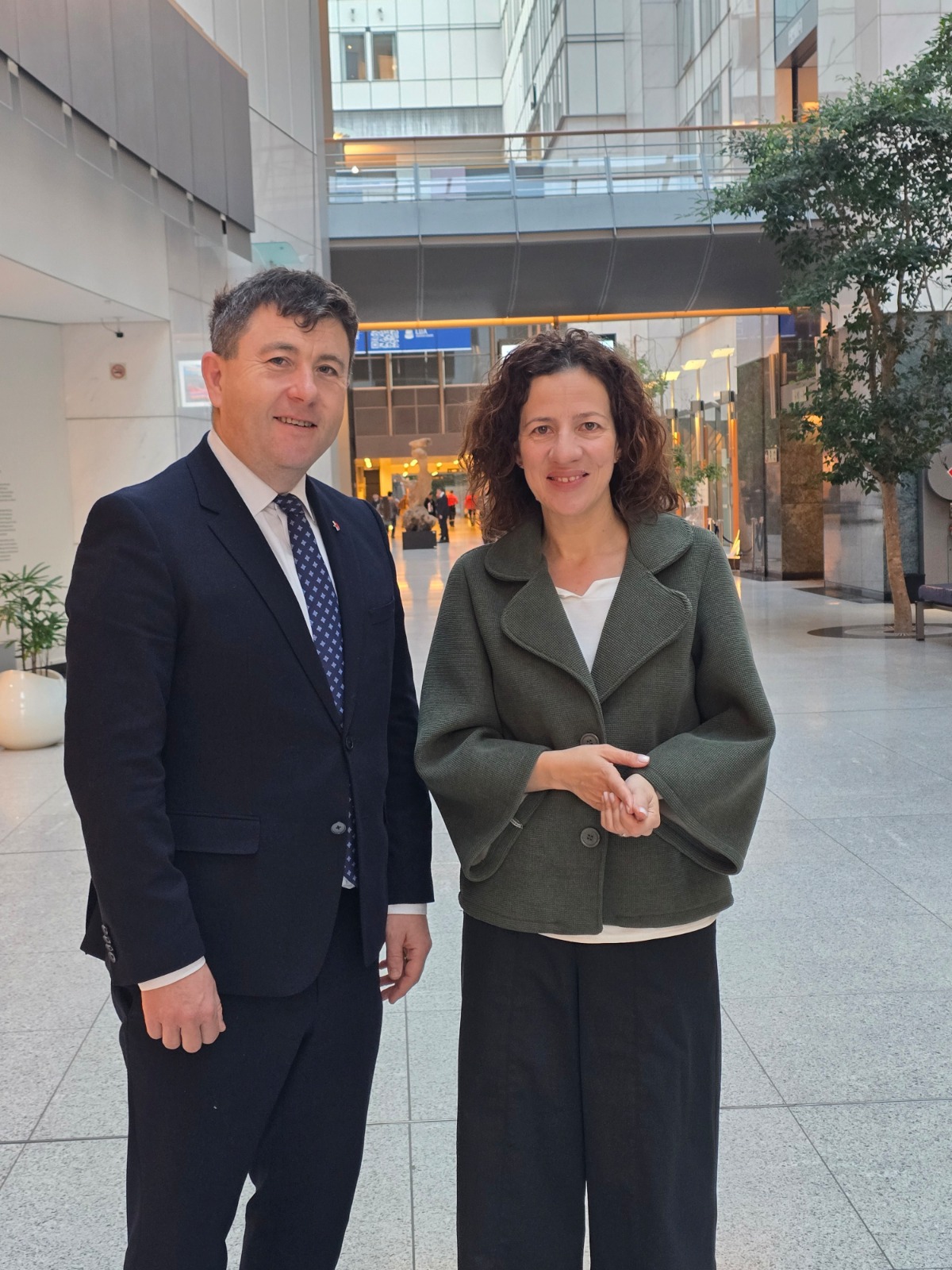
Following the debate, Borboly held a personal discussion with Executive Vice-President Roxana Mînzatu in the corridors of the European Parliament.
During the meeting:
Mînzatu expressed openness to including mountain skills in the Union of Skills programme.
They agreed that Borboly will prepare a concrete proposal to be discussed with her team.
The idea of organizing a local dialogue in Harghita County on mountain skills was raised, with Mînzatu indicating her willingness to participate.
What does this mean in practice for Harghita County?
Farmers’ support
Goal: Higher and mandatory EU compensation for natural constraints in mountain areas.
How: Integrating the Alliance’s proposals into CAP legislation — with at least 15% allocated to disadvantaged areas.
Coexistence with bears
Goal: Permanent funding for prevention (electric fencing, guard dogs) and compensation.
How: Multifund approach combining agricultural and cohesion funds.
Youth and skills
Goal: Recognition of mountain skills (shepherding, forestry, mountain tourism) in the EU skills strategy.
How: Proposal within the Union of Skills framework.
Local dialogue
Goal: A joint event in Harghita County with the European Commission on mountain skills.
Status: Organization in progress, with Mînzatu’s participation.
Why does this matter?
Europe’s mountain areas — including Harghita County — represent around 30% of EU territory. They provide water security, carbon storage, food production and biodiversity for the entire continent.
Yet mountain farming is more costly, young people are leaving, and EU policies often overlook these specific challenges.
As a member of the Alliance for European Mountains and the European Committee of the Regions, Csaba Borboly is working to ensure that the next EU budget (2028–2034) includes concrete legal instruments to secure the future of mountain municipalities — not slogans, but regulatory solutions: a mountain code in the budget regulation, mandatory agricultural minimum allocations, and an expanded skills strategy.
As Borboly stated in his speech:
“Mountains provide water, carbon storage and food security for all of Europe. If we expect this, we must provide the budget to sustain it.”
Brussels, 04.03.2026