
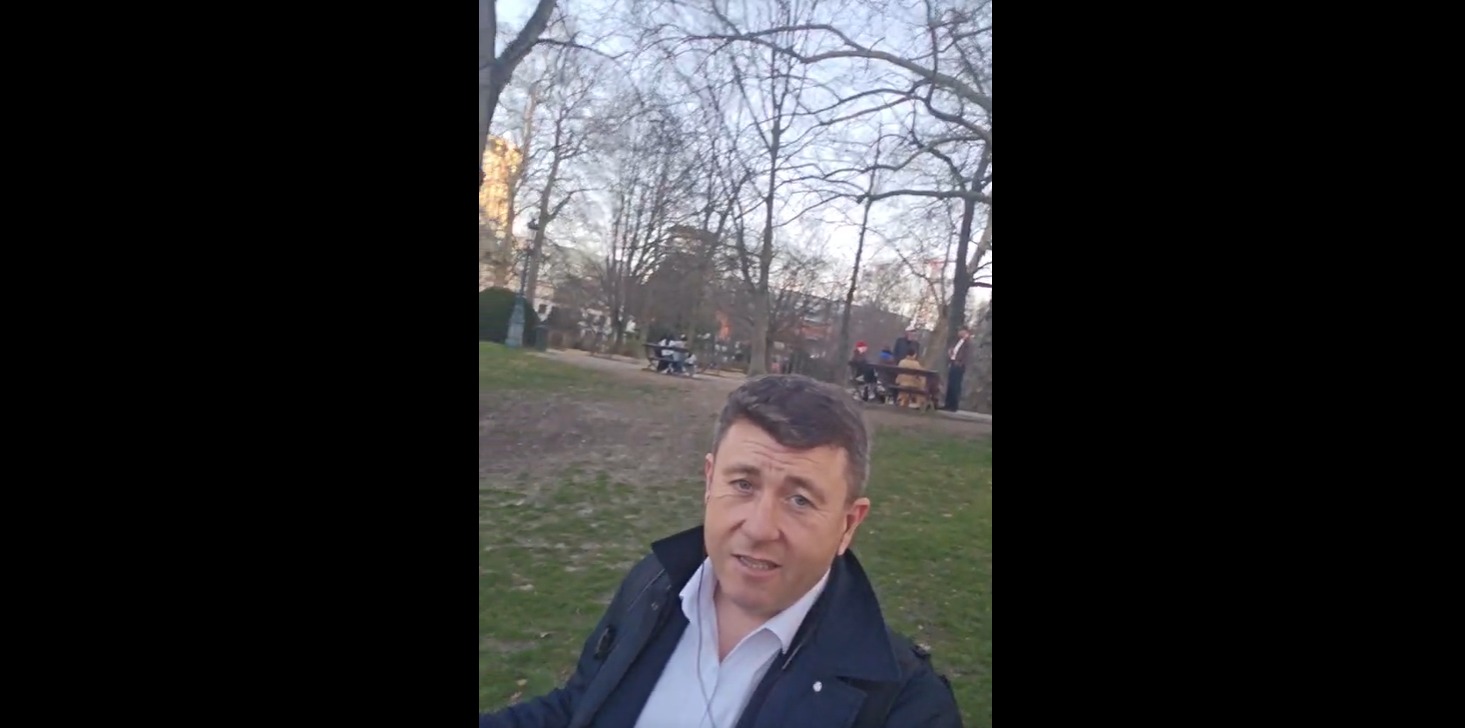
A Day in Brussels for Harghita County: EU Budget and Bear Management – Two Key Consultations
Brussels, 25 February 2026 – Borboly Csaba, Vice-president of the Harghita County Council, participated today in two important Brussels consultations: one on the EU’s 2028–2034 Multiannual Financial Framework (MFF), and one on the European Brown Bear Management Charter. Both topics directly affect Harghita County and the daily life of its rural communities.
Why Brussels Matters
A significant share of European regulations and funding is shaped in Brussels – at the early, technical stage of policymaking. If the perspectives of Harghita County and its communities are not represented at this level, the resulting rules and budgets will determine local opportunities for years – to our disadvantage. EU Member States have entrusted much of the regulation of everyday life to the European Union. That is why it is not enough to complain at home: one must be present where decisions are made.
Borboly Csaba has been active in the European Committee of the Regions (CoR) for over a decade, serving as rapporteur on several key files and Harghita County is one of the most prominent voices in EU decision-making – representing a mountainous, border, and nature-rich region with very specific challenges.
The Next EU Budget: Fair Financing for Nature-Preserving Regions
Today’s consultation at the European Committee of the Regions – chaired and moderated by Rafał Trzaskowski, Mayor of Warsaw – focused on how climate, energy and environmental priorities should be reflected in the 2028–2034 Multiannual Financial Framework (MFF). This framework determines how much and on what the EU spends over seven years, including rural development, agricultural support and nature protection measures.
According to the European Commission’s July 2025 proposal, at least 35% of expenditure in the next budget must serve six environmental objectives – up from the current 30% climate target, but the separate biodiversity spending target would be eliminated. This poses a serious risk: without a dedicated biodiversity financial target, nature protection spending could be sidelined.
“One Europe, Not Two” – The Core Message
Borboly Csaba highlighted a fundamental imbalance: regions in Europe that have no protected species can farm more freely and are more competitive. In contrast, regions like Harghita County – which have preserved their natural wealth, living alongside bears, wolves and protected forests – bear numerous restrictions, while prevention, monitoring and compensation all require additional resources.
Those who preserve nature should not be penalised for it. The next EU budget must recognise and compensate the regions that sustain Europe’s biodiversity. Borboly Csaba also proposed the creation of a dedicated biodiversity fund – so that nature protection costs are not covered from the Common Agricultural Policy (CAP) budget.
The EPP family cooperation – both Trzaskowski and Borboly are members of the European People’s Party – provides a realistic opportunity to integrate these perspectives into the final budget proposal.
The Bear Management Charter: A European-Level Solution Is Needed
The second key meeting of the day took place with representatives of FACE (the European Federation for Hunting and Conservation), reviewing the draft Brown Bear Management Charter. FACE is the umbrella organisation for hunters and conservationists across 37 European countries, and a key player in the European management of large carnivores.
In October 2025, a European seminar in Foix (France) adopted the foundations of the Bear Management Charter, with representatives from eight countries – including Romania – participating. At today’s Brussels meeting, Borboly Csaba expanded the draft with an amendment package, aiming to ensure that biodiversity and rural livelihoods reinforce each other in regions with high bear density.
Key Amendments
• Regional rapid response and transparency: establishment of county and regional rapid-response units, integration of bear incidents into civil protection planning, and creation of public online map-based incident reporting systems.
• Cross-border population management: brown bears should be managed in cross-border, population-level units; regional platforms – involving farmers, hunters, conservationists and authorities – should be recognised as full partners in decision-making.
• Fair compensation: not only direct damages but also indirect losses of smallholders and beekeepers – increased guarding costs, livestock guardian dogs, production losses – should be compensated under harmonised EU criteria. Prevention tools should receive up to 100% support.
• Training and monitoring: accredited regional training centres, genetic-method-based population monitoring, and publicly accessible data.
Downlisting the Protection Status – Following the Wolf Precedent
A central element of the bear issue: in Member States where the brown bear population has significantly grown and endangers human lives, the species’ protection status must be reassessed.
There is a viable legal pathway: the 2024–2025 wolf precedent demonstrated this. In December 2024, the Standing Committee of the Bern Convention adopted by two-thirds majority the reclassification of the grey wolf from “strictly protected” to “protected.” In March 2025, the European Commission submitted the amendment to the Habitats Directive, which entered into force in June 2025 – Member States must transpose it into national law by 15 January 2027.
The same path must be pursued for the brown bear. Romania – with Europe’s largest bear population outside Russia, estimated at 10,000–13,000 individuals – is particularly affected. Over the past twenty years, 26 fatal bear attacks have occurred in the country and 274 people have been seriously injured.
International Consultation in Romania – The Next Step
Today’s meeting resulted in an agreement: an international consultation must be organised in Romania to prepare the “downlisting” – the reclassification of the brown bear from “strictly protected” to “protected” – for the affected EU Member States. This Bucharest conference will be crucial, as several Member States have already signalled support for reviewing the protection status. UDMR’s positions within Romania’s government make organising this consultation a realistic objective.
The bear issue must also be placed on the agenda of an upcoming EU Council Presidency – it must become part of the formal agenda, so that uniform application of the law is ensured and situations in which delays lead to the loss of human lives are prevented.
Why Does All This Matter?
European life is largely shaped in Brussels – policies begin at a low, technical level and rise from there to the big decisions. If we miss the preparatory phase out of convenience, we can later complain about the European Union – but we will no longer be able to change the outcome.
Borboly Csaba travelled to Brussels for this reason: so that the voice of Harghita County’s people is at the table where European decisions are made. As part of the UDMR team, some work in Bucharest, others at home in local communities. Comprehensive, coordinated effort is needed so that life in our region is safe, liveable, and one where nature’s beauty is preserved – but people’s lives and safety are also guaranteed.
Brussels, 25 February 2026