The European Commission confirms: Romania is free to act in addressing the bear issue
Brussels, 3 February 2026 – At today’s meeting of the Environment Commission (ENVE) of the European Committee of the Regions (CoR), an important step forward was made regarding European rules on coexistence with large carnivores. A representative of the European Commission’s Directorate-General for the Environment made it clear: EU law does not prevent Romania from taking effective measures to ensure public safety.
Intervention at the committee meeting
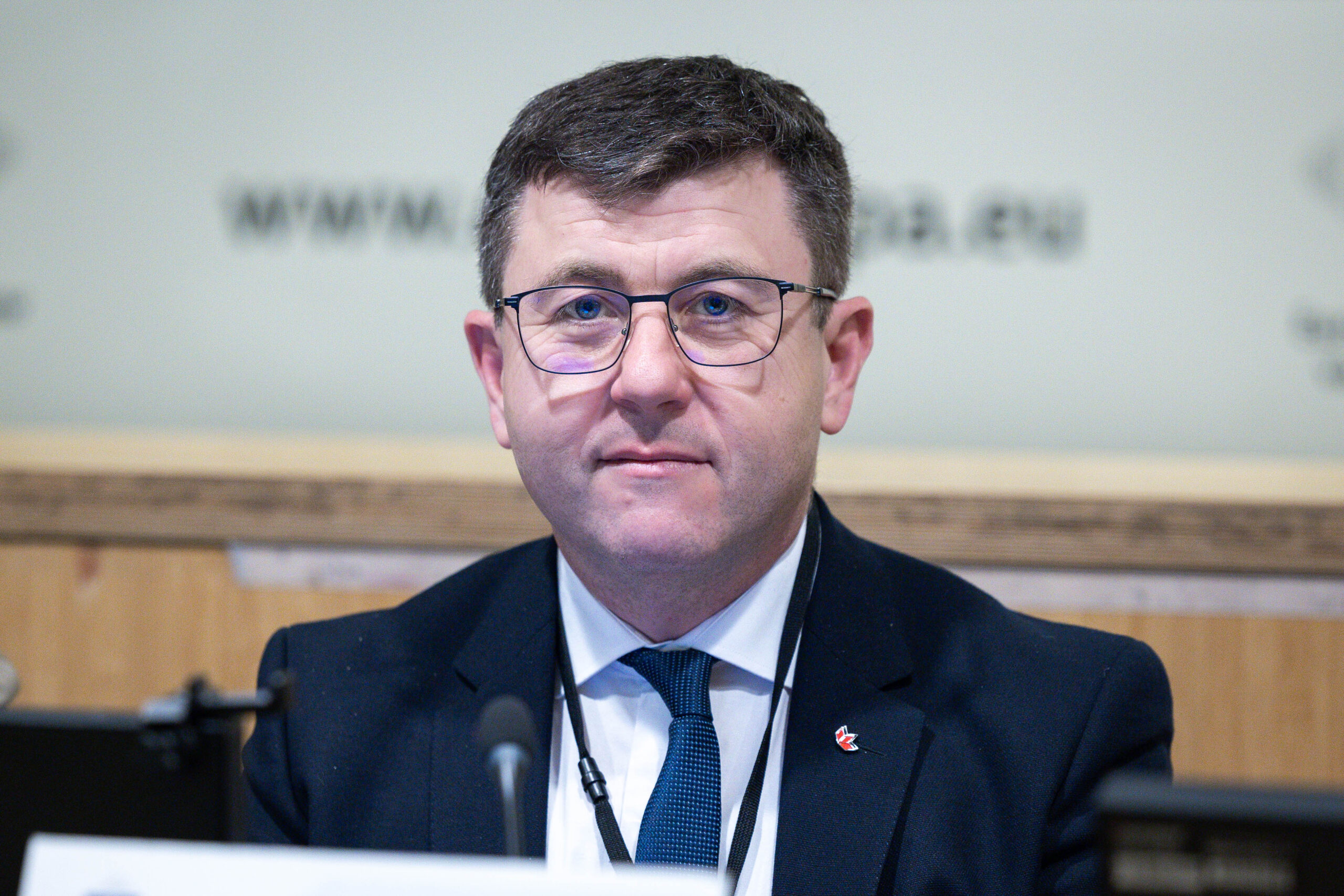
The agenda included the review of the 2025 Environmental Implementation Review (EIR), for which Stefania Proietti, President of the Umbria Region, is preparing a draft opinion. In this context, Csaba Borboly, President of the Harghita County Council and member of the CoR ENVE Commission, took the floor as shadow rapporteur for the opinion.
Borboly presented four concrete proposals to be included in the draft report:
- The protection of human life and safety must be explicitly stated as a priority in the implementation of the Habitats Directive.
- The European Commission should consider launching infringement procedures against Member States where compensation systems do not function, preventive measures are lacking, and human safety is repeatedly put at risk.
- The opinion should acknowledge that the abandonment of traditional farming directly threatens biodiversity – as grazing disappears, species-rich grasslands, pollinators, and habitats are lost.
- An EU Financial Solidarity Mechanism should be created in the 2028–2034 budgetary period to support regions affected by large carnivores.
In his speech, Borboly supported his arguments with concrete data illustrating the seriousness of the situation in Romania: more than 10,000 bears live in the country, over 5,200 compensation cases were recorded in just two years, and 86% of mayors do not dare to take decisions on interventions due to legal uncertainty.
The Commission’s response: Romania is free to act
In his reply, Nicola Notaro, Head of Unit at the European Commission’s Directorate-General for the Environment, clearly stated the EU position. He emphasized that Romania has full freedom to take measures to manage the bear population. The European Union does not prohibit Member States from acting or from managing wildlife populations in a way that ensures the safety of human lives.
Notaro also highlighted a fundamental principle of environmental policy: prevention is far easier and cheaper than remediation. This is especially true when human lives are at stake—these cannot be compensated or restored afterward. Prevention is therefore not only an economic necessity, but also a moral obligation.
This clarification is particularly important because, in Romania, authorities often claim that EU regulations tie their hands. The Commission representative’s words now make it clear: the problem is not in Brussels, but in domestic implementation.
Cooperation with the rapporteur
Rapporteur Stefania Proietti responded positively to the proposals. She confirmed that she will work closely with Csaba Borboly as shadow rapporteur during the drafting process. The aim is for the final document to go beyond general statements and include concrete recommendations addressed to the European Commission.
The rapporteur underlined that the cooperation seeks to ensure the opinion serves environmental and nature protection across Europe, while also taking into account the real challenges faced by rural communities. The goal is an EU policy that does not pit nature conservation against human safety.
What does this mean in practice?
Today’s meeting marks a milestone in several respects:
- The European Commission has publicly confirmed that Romania cannot invoke EU law as an excuse for failing to take effective action on the bear issue.
- The CoR opinion will address the large carnivore question and may put forward concrete proposals to the Commission, including the possibility of infringement procedures.
- Harghita County’s experience can be incorporated into a European document, serving as a model for other affected regions.
The committee adoption of the opinion is expected on 18 June 2026, with plenary adoption scheduled for 12–15 October 2026. Until then, intensive work will continue on finalizing the text.
The message is clear
The key message of today is that the responsibility lies with Romania. The European Union provides the legal framework, funding opportunities, and professional support—but action must take place at national and local level.
The action plan developed by the Harghita County Regional Large Carnivore Platform proves that workable solutions exist. The real question now is whether the Romanian government and local authorities will use these opportunities, or whether inaction and shifting responsibility will continue in the face of a worsening situation.
The protection of human lives cannot wait any longer.
Csaba Borboly
Vicepresident of the Harghita County Council
Member of the ENVE Commission of the European Committee of the Regions
Brussels, 3 February 2026